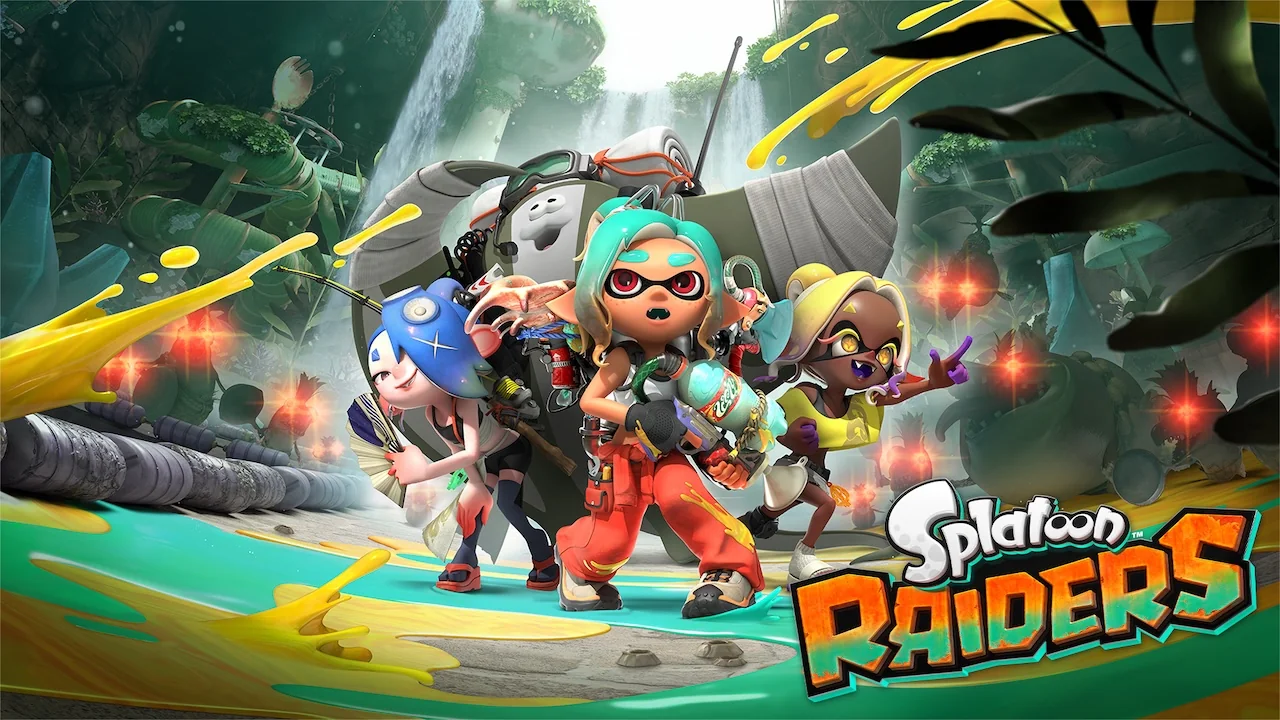
The Splatoon Raiders Direct aired on June 30, 2026, giving Nintendo’s first Splatoon spin-off a focused presentation before its July 23 launch. Its largest reveals were the treasure-raiding mission loop, three Tank families, customizable Gadgets, more than 100 weapon variations, permanent progression, adjustable difficulty and cooperative play for up to four players.
The game is now available, so this recap treats the presentation as a dated record rather than a preview full of open predictions. It explains what Nintendo actually announced, why each system mattered and where a current guide should replace presentation-era assumptions.
Splatoon Raiders Direct at a glance
Nintendo’s official archive describes the dedicated show as roughly 15 minutes. That presentation was followed by a separate Nintendo Treehouse: Live stream with approximately 30 minutes of additional gameplay. When a recap refers to a long demonstration or a specific unedited mission, it may be drawing from Treehouse rather than the Direct itself.
| Direct fact | Confirmed information |
|---|---|
| Date | June 30, 2026 |
| Approximate length | 15 minutes |
| Platform | Nintendo Switch 2 exclusive |
| Release date announced | July 23, 2026 |
| Core format | Single-player-focused action shooter with optional co-op |
| Major systems | Raids, Tanks, Gadgets, weapon loot, upgrades, difficulty and multiplayer |
| Companion broadcast | Separate Treehouse: Live gameplay session, approximately 30 minutes |
The official presentation is the best source for Nintendo’s launch pitch, while the finished product page is the better source for current player counts, supported features and availability. Watch the original and related official footage through the site’s verified Splatoon Raiders video library if you want the announcements in their original order.
The Direct established the treasure-raiding loop
The presentation framed Splatoon Raiders around a repeatable expedition loop. A storm forces the Mechanic and Deep Cut down on the remote Spirhalite Islands. After building a Hideout Ship, the crew heads into nearby areas to fight Salmonids, mine Spirhalite, recover salvage and search for treasure. The useful finds return to the ship, where they support upgrades for the next trip.
Nintendo showed several kinds of destination rather than one repeated arena. Its recap describes crystal-rich areas, Salmonid-filled dens, facilities that restrict the equipment you can use and dungeons that lead farther underground. Lesser Salmonids threaten through numbers, Boss Salmonids carry stronger individual mechanics, and Seasoned Salmonids represent particularly tough variants.
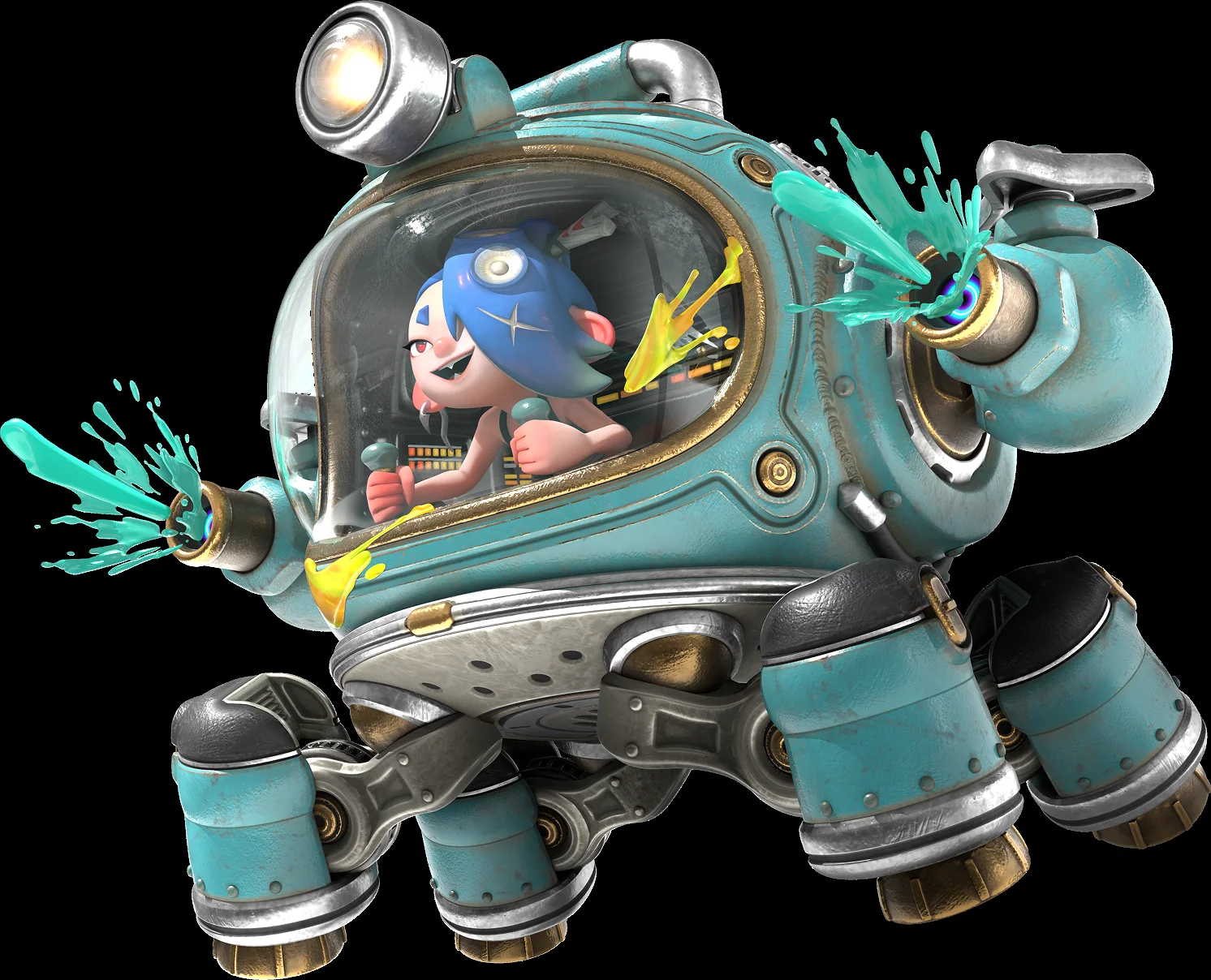
The companion bot prevents “single-player-focused” from meaning completely alone. One Deep Cut member pilots it during a raid, and the Direct showed the bot helping to locate treasure, generate powerful attacks and move the Mechanic through the environment. That relationship is part of the core design, not a substitute player quietly added by multiplayer matchmaking.
This also separated Raiders from competitive Turf War. The goal is not to cover more ground than an opposing player team before a timer expires. It is a PvE treasure expedition in which combat, movement and collecting materials feed long-term progression. Our genre and gameplay-loop explainer examines why that structure is not the same as a traditional roguelike.
Tanks, Gadgets and more than 100 weapons
The Direct’s most important mechanical reveal was that Raiders separates the player’s conventional ink weapon from a new set of mechanical Gadgets. Nintendo showed three Tank types—Speed, Power and Tactical—and each Tank provides access to a different Gadget family. The player begins by equipping two Gadgets, then uses them alongside a normal weapon rather than replacing the weapon outright.
| Tank | Direct’s role | Gadget examples shown |
|---|---|---|
| Speed Tank | Mobility, fast attacks and evasion | Blast Boot, Dash Bomb, Booyarang |
| Power Tank | Direct pressure, crowd clearing and shield breaking | Splatchet, Splatellites, Spinwheel |
| Tactical Tank | Deployment, linked effects and battlefield control | Shot Pot, Bombloons, Tether Wail |
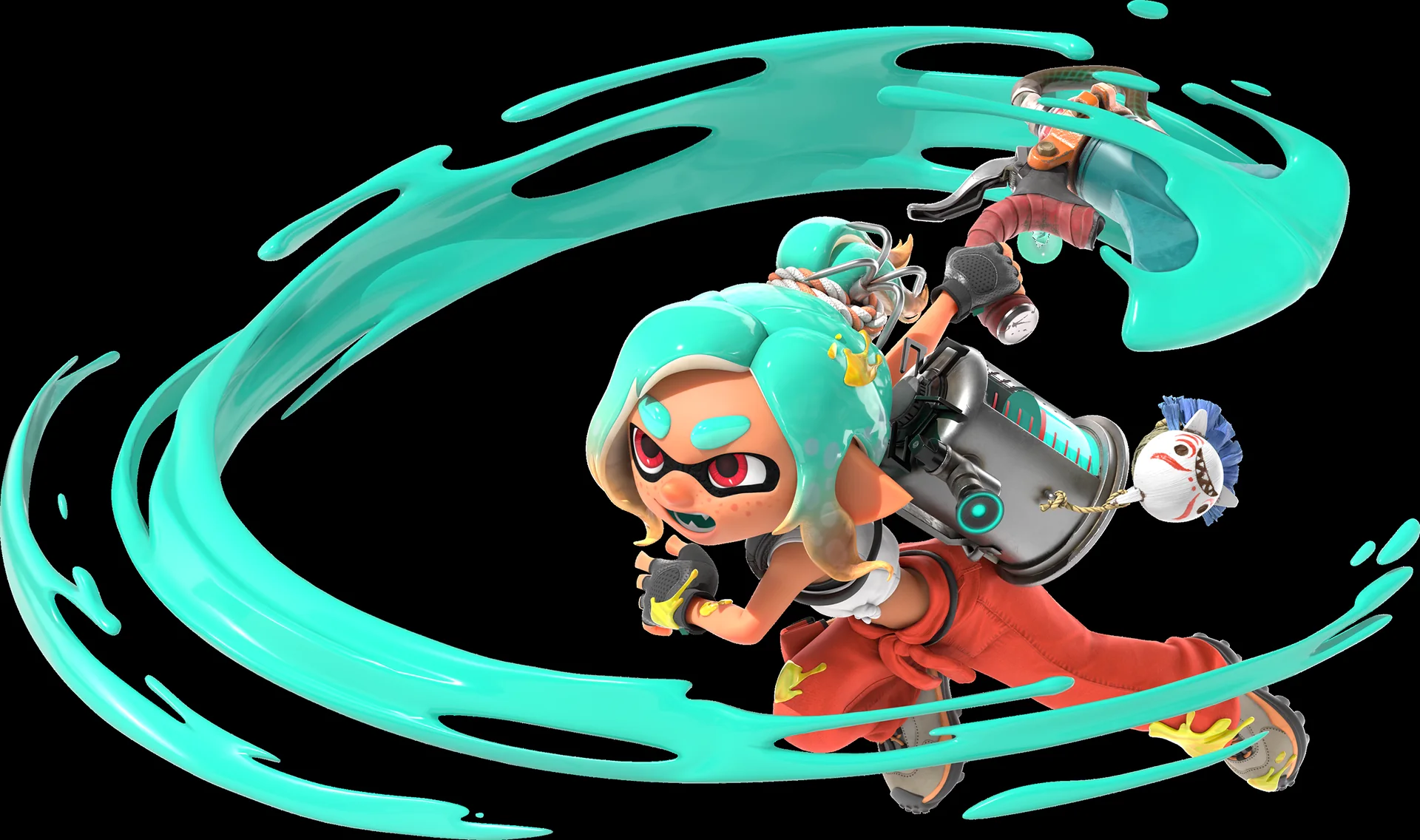
Those labels describe playstyle, not a permanent class choice. Nintendo’s product page says players can swap Tanks between missions, and the Direct emphasized improving Gadgets with parts recovered on expeditions. Parts can change practical properties such as damage, fire rate, duration, area or added effects. The value of one Gadget therefore depends on both its base behavior and the parts fitted to it.
Weapons form a parallel loot track. Nintendo announced more than 100 variations, with defeated Salmonids sometimes dropping them and rare finds carrying special powers. Current regional product information groups those finds into 11 weapon types. That gives the player a conventional firing tool plus two cooldown-based Gadgets, which the developers later described as a deliberate rhythm of rapidly switching actions to minimize downtime.
The Direct did not establish one universally best Tank or loadout. Mobility, immediate damage and area control solve different problems. Use the Tank and Gadget Explorer when you want current compatibility and role comparisons instead of treating the presentation’s few examples as a complete tier list.
Progression, difficulty and the Hideout Ship
Nintendo used the Direct to show that raid loot feeds several persistent growth systems. Defeating Salmonids raises the Mechanic’s level, salvage supports construction and equipment upgrades, and repeated Tank use unlocks further enhancements. The presentation specifically described improving attack power and HP at the Mechanic’s Shack and eventually increasing a Tank from two equipped Gadgets to three.
Deep Cut also received practical jobs aboard the Hideout Ship. Shiver assists with crafting Gadgets in the Gadget Workshop. Frye handles weapon upgrading and the conversion of unwanted weapons into materials at the Weapon Stash. Big Man catalogs useful information. The ship is therefore more than a mission-select screen: it turns recovered materials into a stronger and more flexible raid setup.
Three difficulties without a loot penalty
The Direct confirmed Tourist, Raider and Survivalist difficulty settings. Tourist is the gentler option, Raider is the standard setting and Survivalist is intended for a higher challenge. Nintendo says players can change difficulty at the Hideout Ship, and the finished product page says the choice affects combat rather than the loot available.
That detail is important for build progression. A player does not need to stay on a frustrating setting to preserve access to better rewards. The developers later called these the first selectable difficulty settings in a Splatoon game and described them as a way for newcomers and returning players to experience the same growth loop at their own pace. The beginner guide is the better next step for actual early upgrade choices.
Online and local co-op were confirmed
Although Nintendo called Raiders single-player-focused, the Direct confirmed cooperative play with up to three other people. Players can form groups of two to four through online play or local wireless and tackle treasure raids together. Nintendo also described automatic power scaling intended to keep mixed-progression groups useful rather than letting one experienced player erase every encounter.
The presentation introduced Call for Help as a smaller online-assistance flow. A player blocked by a raid can request temporary help, while another player can answer a request and earn a reward for successful assistance. Nintendo’s post-launch support page later clarified that normal multiplayer options unlock after the first three raids on Erpp Island and documented friend, keyword and local rooms separately from Call for Help.
This was cooperative PvE, not an announcement of competitive Turf War or another PvP playlist. Nintendo also stated that online features require a Nintendo Account, Internet access and paid Nintendo Switch Online membership, while multiplayer may require additional games and systems. For current setup steps and exact mode requirements, use the site’s multiplayer and co-op guide rather than a presentation recap.
Character customization, amiibo and the prequel comic
The Mechanic is a player-defined protagonist rather than a fixed promotional model. The Direct showed appearance customization and said that challenges across the islands reward outfits. Cosmetics were presented separately from the weapon, Tank and Gadget progression systems, so changing an outfit should not be confused with fitting a combat part. The full launch wardrobe is tracked in our character customization and outfits guide.
Nintendo also confirmed outfit rewards from compatible Splatoon amiibo. The new Raiders versions of Shiver, Frye and Big Man each unlock a design themed after that character. Post-launch support later clarified that the amiibo option becomes available after the first three raids and that other compatible Splatoon-series figures unlock another outfit. The amiibo rewards guide provides the current scanning steps and reward details.
The presentation pointed viewers to Deep Cut’s Island Misadventures, an official daily prequel comic in the Nintendo Today smart-device app. Its role was to show events leading into Raiders rather than to act as a chapter inside the game or a downloadable PDF. Follow the official comic reading guide for the correct app route and order.
Direct vs Treehouse vs the finished game
The June 30 Direct and the Treehouse session are related but separate sources. The Direct is the tightly edited announcement presentation, listed by Nintendo at roughly 15 minutes. Nintendo Treehouse: Live followed it with approximately 30 minutes of additional gameplay. A long uninterrupted raid, extended menu browsing or commentary from presenters is more likely to come from Treehouse.
That distinction prevents a common recap error: attributing every clip shown on June 30 to the Direct’s formal announcement list. The Direct tells us what Nintendo chose to reveal. Treehouse shows how parts of it looked in a longer demonstration. Neither should override a later support article or the finished product page when the question concerns current setup, player counts, updates or availability.
| Question | Best source |
|---|---|
| What did Nintendo announce on June 30? | The dedicated Direct and official recap |
| How did an extended mission look before launch? | Nintendo Treehouse: Live |
| What platforms and player counts are listed now? | Current Nintendo product page |
| How do I update or start multiplayer? | Current Nintendo Support pages |
| What should a new player do first? | Current release-build guides |
Use the site’s video library to locate the correct broadcast, and the game information page for facts that may have changed after the presentation.
What the Direct did not confirm
A focused presentation can still leave questions unanswered. The June 30 Direct did not announce competitive PvP, a Turf War mode, GameShare support, a downloadable eShop demo, a DLC roadmap or a special-edition Splatoon Raiders console. The fact that Nintendo discussed co-op, physical copies and themed accessories does not silently confirm any of those separate products or features.
Current official pages should be checked before turning an omission into a permanent “never.” As of August 2, 2026, Nintendo’s US product page lists online and local wireless co-op, amiibo support and Nintendo Account family-group lending. It does not label the game as GameShare compatible, and family-group lending is a different feature. Likewise, a physical game listing is not a console bundle.
- Confirmed: solo-focused PvE, optional online/local wireless co-op, Switch 2 exclusivity, physical and digital game formats, amiibo.
- Not announced in the Direct: competitive PvP, GameShare, downloadable demo, DLC roadmap, themed Switch 2 hardware bundle.
- Best practice: verify changing features on the current Nintendo product page, then use the game information or multiplayer guide for the latest site explanation.
Splatoon Raiders Direct FAQ
When was the Splatoon Raiders Direct?
It aired on June 30, 2026. Nintendo of America scheduled the presentation for 7 a.m. PT.
How long was the Splatoon Raiders Direct?
Nintendo described it as roughly 15 minutes. The approximately 30-minute Treehouse gameplay stream was a separate follow-up.
Did the Direct confirm multiplayer?
Yes. Nintendo confirmed cooperative raids for up to four players through online play or local wireless, plus a Call for Help feature for temporary online assistance. It did not announce competitive PvP.
Did it announce a Nintendo Switch 1 version?
No. The Direct described Splatoon Raiders as exclusive to Nintendo Switch 2, matching both the first 2025 reveal and the finished product listing.
Was the Treehouse show part of the Direct?
It followed the Direct on the same day, but Nintendo lists it as a separate Treehouse: Live presentation with additional gameplay. Keep the two labels separate when identifying footage.
Where can I watch the presentation now?
Use Nintendo’s Direct archive or official video channels. The site’s verified videos page is the easiest way to find the correct Direct and related gameplay without confusing it with an unofficial re-upload.

Loading comments...