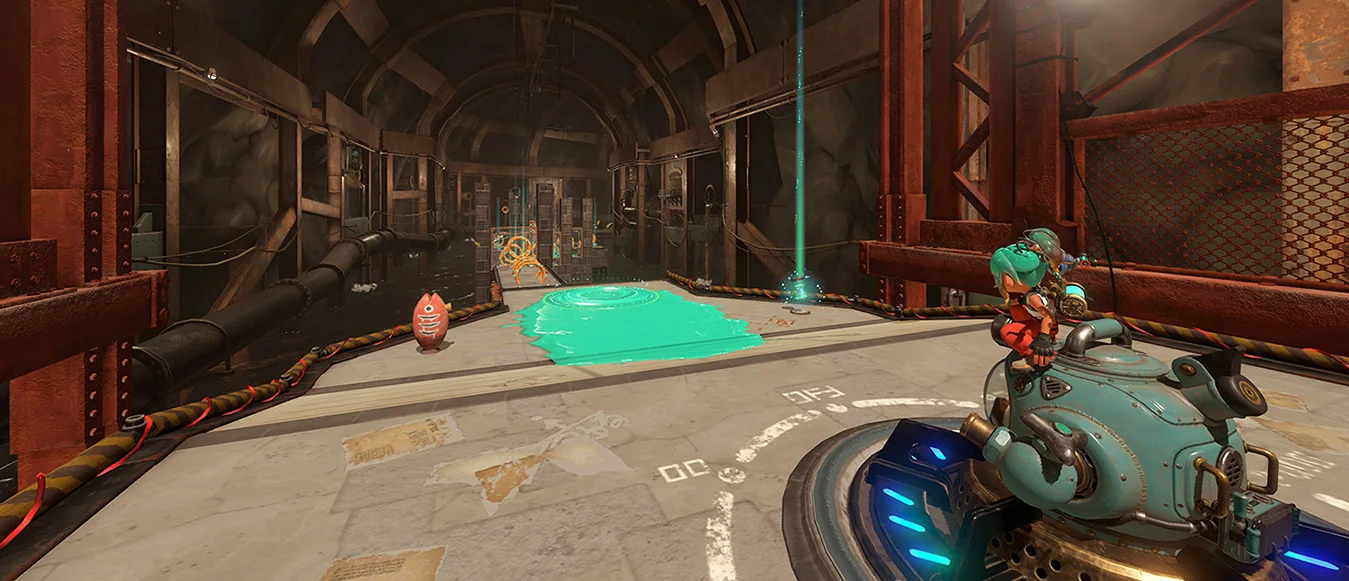
No—Splatoon Raiders is not a traditional roguelike, and the full game is not best described as a roguelite either. It is a single-player-focused third-person PvE looter shooter with optional co-op, authored raids, randomized gear rewards, and extensive permanent progression. You repeat missions and adjust builds, but defeat does not erase your campaign character and send you back to the beginning.
The confusion is understandable. Raiders has short expeditions, variable loot, build experimentation, escalating difficulty, and a post-game mode with randomized challenges. Those features create some of the same “one more run” energy as a roguelite. The key difference is what the game keeps: your Mechanic grows, your weapons and Gadget collection grow, your Tanks improve, and the Hideout Ship develops across the campaign.
Why people call Splatoon Raiders a roguelike
A typical Raiders session has a run-shaped rhythm. You select a mission, choose a weapon and Tank, equip compatible Gadgets, enter an island or combat sequence, claim loot, and return to the Hideout. If the next mission defeats you, you can change the build and try again. From a distance, that resembles the preparation, run, failure, and adaptation cycle associated with modern roguelites.
Random rewards strengthen the impression. Raids can drop weapons, Gadget components, and materials at different levels or qualities, so two players will not necessarily build the same inventory in the same order. Build decisions also matter: a movement-focused Speed setup and a battlefield-control Tactical setup can approach the same enemy pressure differently.
However, repeatability and random loot are not enough to define a roguelike. Monster-hunting games, looter shooters, action RPGs, and dungeon crawlers all reuse missions and reward tables. The more useful questions are whether a failed run resets the character, whether most power is temporary, and whether the campaign world is regenerated. Raiders answers those questions differently from a roguelike.
Roguelike test: feature-by-feature comparison
Nintendo does not market Splatoon Raiders with the word roguelike. Its official product page instead summarizes the game as “splat, loot, upgrade, repeat.” A Nintendo Life hands-on preview explicitly concluded that it was not a roguelike because the player can keep improving after defeat. Finished-game reviews from Tom's Guide and GameSpot consistently use looter shooter or loot-focused horde shooter.
| Feature | Traditional roguelike or modern roguelite | Splatoon Raiders |
|---|---|---|
| Failure | Ends the run; often removes most run power | Ends the attempt; the campaign character and unlocked systems remain |
| Permadeath | Central or genre-defining in traditional forms | No whole-character permadeath |
| Level structure | Commonly procedurally generated or heavily remixed | Main campaign uses authored raids and objectives |
| Build duration | Much of a build exists for one run | Weapons, Gadgets, Tanks, stats, and ship upgrades persist |
| Reward loop | Unlocks may expand future runs | Loot directly strengthens a continuing campaign inventory |
| Story progression | Often advances through repeated fresh runs | Advances across a stable map toward campaign and post-game goals |
Raiders borrows the pleasure of adaptation without building its identity around loss. That makes it friendlier to players who dislike watching a successful build disappear, but it also means roguelike fans should not expect every attempt to generate a new map and a temporary stack of powers.
The actual Splatoon Raiders gameplay loop
The official four-word description is accurate: splat, loot, upgrade, repeat. What matters is that each verb feeds a continuing character. You do not enter a raid as a blank slate. You bring a weapon from your collection, one of three Tanks, two compatible Gadgets, equipment choices, and the benefits of systems already opened aboard the Hideout Ship.
That structure is closer to a compact looter shooter or action RPG campaign than to Hades or Splatoon 3: Side Order. Missions are short enough to retry casually, yet the result of a session is an expanding inventory and stronger baseline rather than one completed or failed run disappearing into history.
Raid
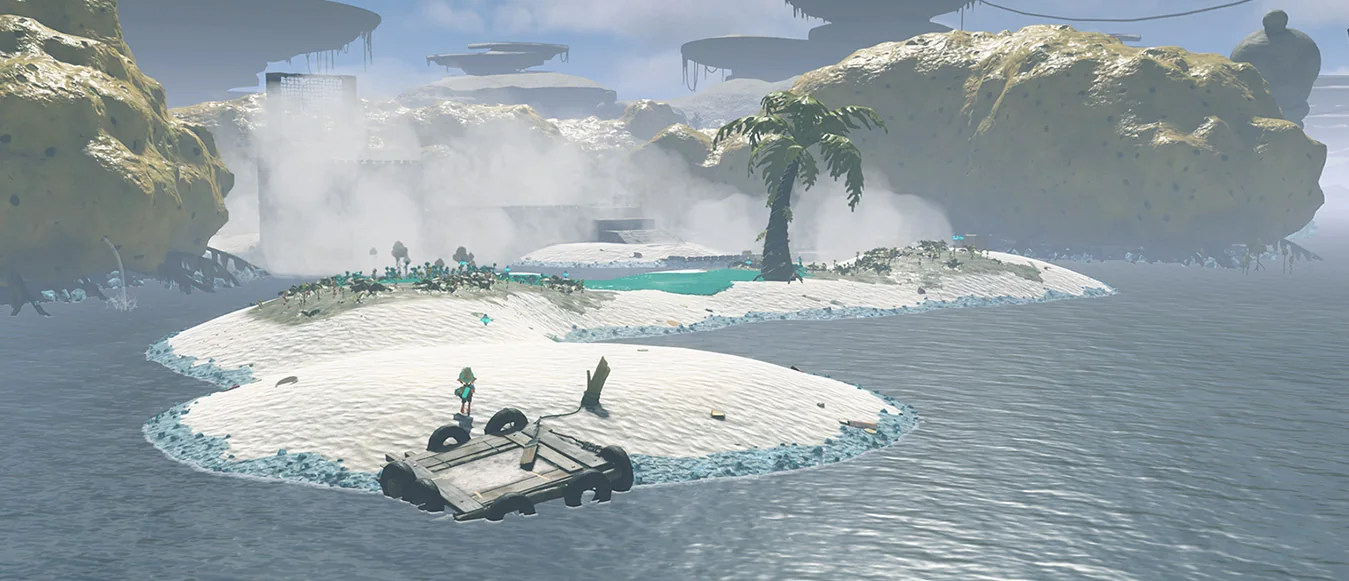
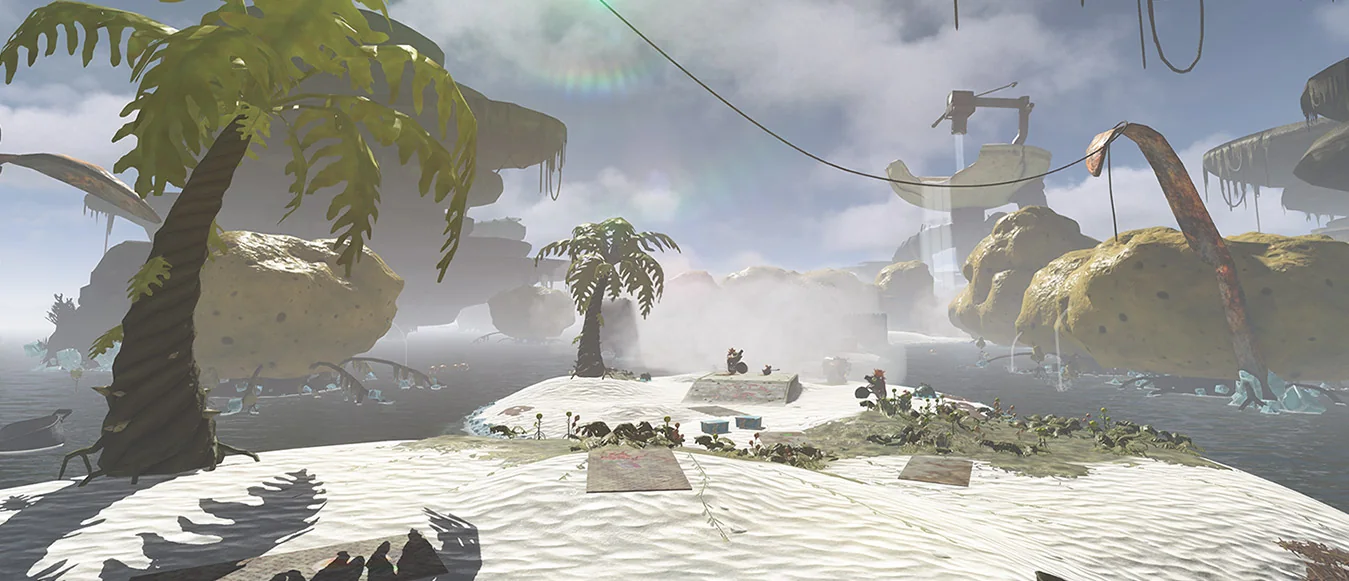
Raids are discrete PvE missions across the Spirhalite Islands. Objectives range from boss encounters to freer salvage stages where the Mechanic gathers Power Eggs and drills into treasure. Other missions emphasize waves, traversal, time pressure, or a mixture of those tasks. The familiar Splatoon movement rules—inking ground, swimming through your color, climbing inked surfaces, and managing the ink tank—remain the foundation.
Most importantly for the genre question, these are designed objectives on a campaign map. They can be replayed at greater difficulty, but replaying an authored challenge is not the same as generating an entirely new dungeon seed.
Loot
Successful raids supply weapons, Gadget components, materials, and other rewards. The qualities and combinations give the game its random layer. A new weapon may support a different range or fire rhythm; a Gadget part may improve the tool that solves a problem in your build.
The loot returns with you to the Hideout Ship and joins a persistent inventory. That is classic looter-shooter motivation: the exciting question is not only whether the current raid succeeds, but whether its reward opens a stronger or more enjoyable setup for the next raid.
Upgrade
The Hideout is where reward randomness becomes deliberate progression. Weapons can be leveled, Tanks and Gadgets can be developed, character statistics grow, and ship facilities open additional ways to manage equipment. Nintendo's developers describe the Mechanic as gaining attack power, HP, and a wider range of actions over the course of the game.
This long-term investment is the decisive difference from a run-reset design. You may swap parts or discover that a new item deserves resources, but the game does not ask you to rebuild the entire Mechanic from zero after every defeat.
Repeat at a higher challenge
Stronger equipment lets you tackle tougher Salmonids and harder mission variants, which in turn offer reasons to keep developing the build. Later, Super Spicy reworks most campaign challenges at fixed Survivalist difficulty, and the post-game provides an extended climb. Difficulty escalates alongside your stored power.
That feedback loop can be as compulsive as a roguelite, but its emotional tone is different. A bad attempt is usually information about target priority, movement, or an equipment gap. It is not the loss of an hour-long temporary build.
What happens when you fail a raid?
Failure ends the current attempt, but it does not kill the Mechanic permanently or erase the completed campaign map. You return with access to the systems and progression you have already unlocked, which allows you to change the weapon, Tank, Gadgets, parts, or difficulty before trying again. Nintendo Life's hands-on description captures the intended feeling: even after a boss ended a run, there was a sense that the player could adjust abilities and come back stronger.
One caution is important: do not turn that statement into the unsupported promise that every individual pickup collected during every failed mission is always banked. Retention rules can depend on the mission and reward screen. The verified genre point is narrower and sufficient: a defeat does not perform a whole-character reset or delete your permanent upgrade framework.
Raiders also offers three global difficulty choices—Tourist, Raider, and Survivalist—and the setting can be changed. Normal difficulty affects incoming danger rather than transforming the game into a separate loot tier. Players who are stuck can therefore lower immediate punishment, learn the objective, and keep developing the same save.
How permanent progression changes the feel
In a roguelite, buildcraft often asks, “What combination can this run assemble before it ends?” Raiders more often asks, “Which part of my persistent equipment deserves the next investment?” That creates less reset anxiety and more collection pressure. You may keep a favorite weapon for many missions, refine a Gadget pair, or change Tanks when an objective demands another style.
The three Tanks provide broad identities. Power emphasizes direct impact, Speed emphasizes movement, and Tactical emphasizes control. Their compatible Gadgets turn those identities into usable actions, while weapons sit alongside them rather than being discarded at the end of a run. Use the Tank and Gadget Explorer to inspect those relationships before spending materials.
Persistent strength also supports the game's audience. Nintendo designed Raiders so newcomers and players returning after time away can grow through play without being measured against competitive opponents. Co-op can soften difficult missions, but a solo player can complete the campaign with the same accumulation loop.
Is Bottomless Buffet a roguelite mode?
Spoiler-light post-game note: Bottomless Buffet is the part of Raiders that comes closest to a roguelite-flavored mode. It presents randomized challenges in three-floor groups, raises Salmonid levels as the climb advances, fixes the difficulty to Survivalist, and continues generating challenges beyond its floor-100 story target.
Calling that mode “roguelite-flavored” is useful because its sequencing is less fixed and its long climb encourages adaptation. Calling the entire game a roguelike because this endgame activity exists is misleading. You enter it with the weapons, Tank development, Gadget parts, stats, and Hideout systems earned across the persistent campaign. It does not replace that progression with a fresh level-one character.
For its unlock chain and multiplayer limits, see the post-game and Bottomless Buffet guide. That article keeps the final boss behind a separate spoiler warning.
Raiders versus Side Order, Salmon Run, and looter shooters
| Game or mode | Main structure | What resets or persists |
|---|---|---|
| Splatoon Raiders | Solo-focused PvE loot campaign with optional co-op | Persistent character, inventory, Tanks, Gadgets, and Hideout |
| Splatoon 3: Side Order | Purpose-built roguelite tower runs | Run build resets; broader unlocks support later attempts |
| Salmon Run | Repeatable co-op wave survival shifts | Match/shift state resets; it is not a loot campaign |
| Typical looter shooter | Repeat missions to collect and improve equipment | Inventory and character power persist |
Side Order is the cleaner choice if you specifically want Splatoon movement inside a run-reset structure. Salmon Run provides much of Raiders' enemy and horde-combat DNA, but not its full campaign inventory. Raiders combines that Salmonid pressure with the persistent equipment chase associated with looter shooters.
The comparisons are not claims that Raiders copies one game wholesale. Its movement, ink control, Bot Buddy actions, and short Nintendo-designed objectives give it a distinct identity. Genre labels are useful here only if they tell you what losing, retrying, and upgrading will feel like.
Who will enjoy Splatoon Raiders?
Players who dislike roguelike resets are unlikely to encounter the feature they fear most. The campaign keeps its progression, provides difficulty options, and lets a favorite build develop over time. Random loot can still create repetition, so players who dislike any kind of farming should expect to replay some content when chasing stronger equipment or full completion.
Roguelike fans may enjoy the repeated decision loop and Bottomless Buffet, but should not buy the game expecting Side Order expanded into a full release. The excitement comes from refining a lasting inventory rather than improvising an entirely disposable build every run.
Splatoon and co-op fans get familiar ink movement without competitive Turf War as the center. Raiders is designed primarily for solo play, with one Deep Cut member accompanying the Mechanic in an Exploration Bot, while online or local wireless co-op supports up to four players. Read the multiplayer guide for mode-specific limitations.
Splatoon Raiders genre FAQ
Is Splatoon Raiders an extraction shooter?
Not in the usual PvPvE sense. You raid for loot and return to a base, but the campaign does not center on competing with hostile players, escaping through contested extraction points, or losing a carried kit to another squad. “Looter shooter” is the clearer shorthand.
Does Splatoon Raiders have permadeath?
No whole-character permadeath defines the campaign. Failed attempts do not delete the Mechanic or restart the story from the opening island.
Are the levels procedurally generated?
The main campaign uses authored raids and objectives. Bottomless Buffet uses randomized post-game challenges, but that one activity does not make every island or campaign mission procedural.
Can you play it solo?
Yes. Solo is the primary focus, and a Deep Cut member accompanies the Mechanic through an Exploration Bot. Co-op with up to three other players is optional. For platform, price, and release details, visit the game information guide.
Loading comments...