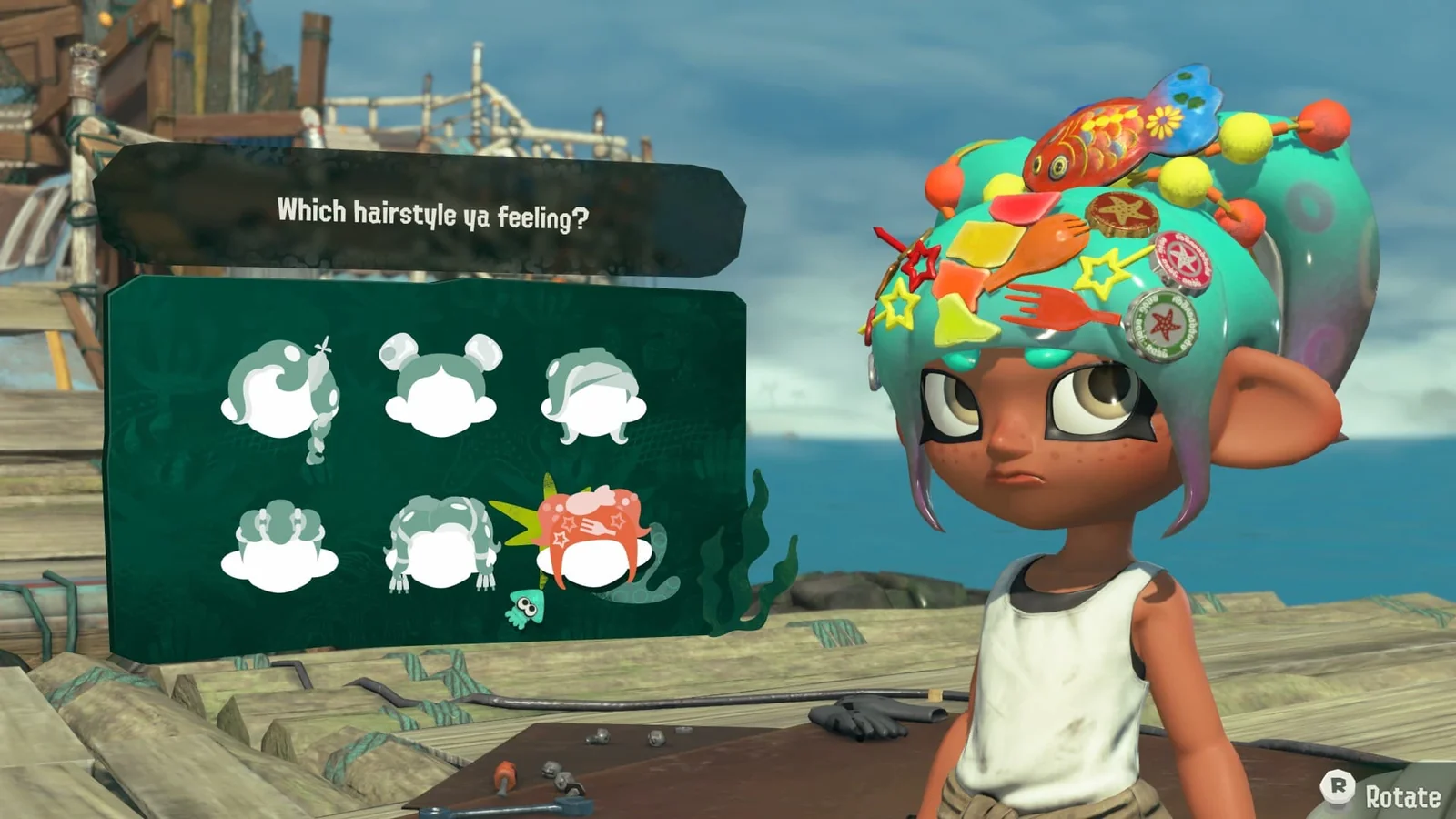
Short answer: buy Splatoon 3 if you want a competitive game built around short PvP matches, backed by Salmon Run co-op and a conventional solo campaign. Buy Splatoon Raiders if you want a Nintendo Switch 2-exclusive adventure whose main loop is exploring PvE raids, collecting loot, and strengthening one character—with co-op available when you want help. On Switch 2, both are good choices, but they serve different appetites rather than occupying the same slot.
Splatoon 3 is still Nintendo Switch software. It runs on Switch 2 through compatibility and has received free Switch 2-specific optimizations; buying it does not give you a separate native “Switch 2 Edition.” Raiders, released July 23, 2026, runs only on Nintendo Switch 2. That platform distinction is absolute. The more useful decision, however, is how you expect to spend an ordinary evening: improving against other players, or building a loadout while fighting Salmonids across repeatable missions.
This spoiler-free comparison checks the current modes, hardware, online requirements, and US purchase costs as of August 28, 2026. It also separates Nintendo's documented features from our recommendations. If this is your first encounter with ink movement, motion aiming, and weapon roles, the site's beginner guide is the useful companion; this page is about choosing the right game, not reteaching every control.
Splatoon 3 vs Splatoon Raiders: the quick answer
| Question | Splatoon 3 | Splatoon Raiders |
|---|---|---|
| Which hardware? | Nintendo Switch software; playable on Switch and Switch 2 | Nintendo Switch 2 only |
| Main reason to play | Competitive ink battles with several supporting modes | Solo-first PvE raids, loot, and persistent upgrades |
| Competitive PvP? | Yes: Turf War plus ranked-style modes | No competitive PvP mode |
| Single-player? | Yes: included Story Mode; more solo content in optional DLC | Yes: the campaign and progression loop are the focus |
| Co-op PvE? | Yes: Salmon Run | Yes: campaign raids for 2-4 players after the opening unlock |
| One-console multiplayer? | No split-screen | No split-screen; the product page lists one player on one system |
| Paid online membership? | Required for online modes, not the solo campaign | Required for online co-op, not solo play |
The safe default is Splatoon 3 for anyone who says “I want Splatoon multiplayer.” Its competitive modes are not a side activity; they are the durable reason to learn maps, weapon kits, positioning, and team roles. Salmon Run provides cooperative relief, while Story Mode makes it possible to learn basic movement without immediately entering matchmaking.
The safe default is Raiders for someone who says “I like how Splatoon controls, but I want my own adventure.” It uses the same broad language of ink, swimming, and varied weapons, then applies it to enemies, treasures, crafting materials, Gadgets, and Tank upgrades. Calling it single-player-focused is precise: solo is the foundation, but it is not a solo-only game.
Core gameplay: competitive matches or repeatable raids?
Splatoon 3 asks you to master a compact ruleset against people who keep changing the problem. Turf War rewards the team that covers the most ground, so a player can contribute through route control and inking rather than eliminations alone. Splat Zones, Tower Control, Rainmaker, and Clam Blitz replace that broad goal with rotating ranked objectives, while X Battles sit at the high-skill end. Weapons arrive as kits whose main, sub, and special tools create a role; improvement comes from better decisions, execution, and coordination, not a permanent attack-stat ladder.
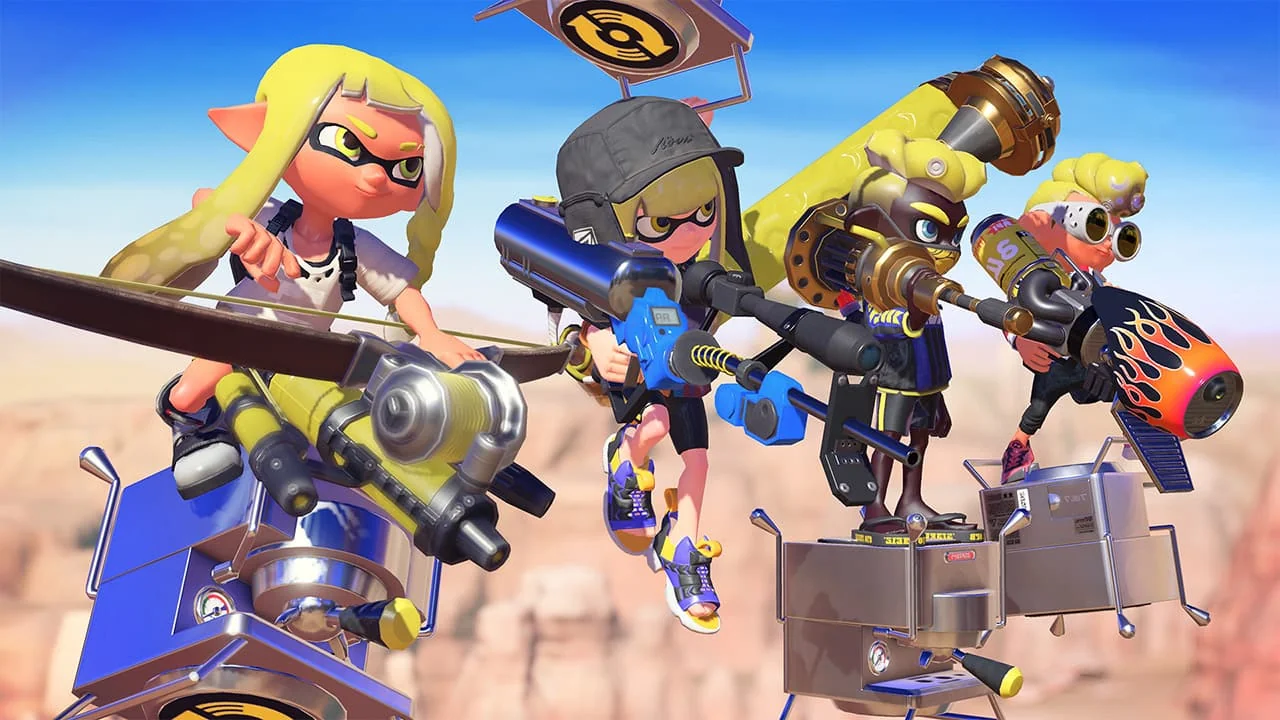
That structure is excellent when you enjoy a clean reset. Every match begins with equal map objectives, and a loss can expose a positioning mistake, a poor matchup, or a team gap. It can also feel demanding: other players punish hesitation, mode knowledge matters, and a good weapon cannot substitute for reading the battlefield. Salmon Run changes the opponents to Salmonids and makes cooperation the objective, but it remains a round-based job inside a broader competitive package.
Splatoon Raiders moves the feedback loop from rank and matchcraft to expedition and growth. You pick a destination, fight Salmonids, gather salvage and treasure, then use the haul aboard the Hideout Ship. Weapons can level, the home base can improve, and recovered materials support equipment development. The Speed, Power, and Tactical Tanks each admit different Gadgets, so your build can emphasize movement, direct force, or battlefield control.
The practical difference is persistence. A hard Raiders mission can become easier because you found a stronger weapon variant, improved a Gadget, changed Tank priorities, or selected another difficulty. A hard Splatoon 3 opponent is not made easier by grinding permanent damage. You become better at the match. That makes Raiders friendlier to players who enjoy visible character progression, while Splatoon 3 better serves people who enjoy an endlessly renewable contest.
Neither loop is shallow, but their complexity lives in different places. Splatoon 3 depth emerges from human opponents, maps, team compositions, and timing. Raiders depth comes from PvE mission conditions, enemy pressure, loot decisions, and build synergy. When Raiders begins asking for more deliberate equipment, use the dedicated build guide rather than treating this buying guide as a late-game recipe book.
Single-player and co-op are not the same in both games
Both boxes can honestly advertise solo and co-op content, but the proportions matter. Splatoon 3 includes Return of the Mammalians, a dedicated Story Mode that Nintendo recommends for learning battles and weapons. It is a proper solo campaign, yet it is one mode beside the competitive lobby and Salmon Run. The optional Expansion Pass adds Side Order, a separate replay-oriented solo campaign; you do not need that purchase to play the included story, PvP, or Salmon Run.
Salmon Run is Splatoon 3's cooperative PvE job. Four players, one per system, fight waves, manage bosses, and deliver Golden Eggs. The shifting pressure can feel close to the franchise's competitive intensity even though everyone is on the same side. It is ideal for a group that wants brief, repeatable teamwork and then might pivot into PvP. It is not a way to co-op through Return of the Mammalians.
Raiders reverses that relationship. Its adventure is the product's center, and supported raids can be tackled solo or with a group. Solo players receive help from a Deep Cut member operating a Bot Buddy. After completing the first three raids on Erpp Island, the multiplayer radio opens 2-4-player rooms through local wireless or online. Nintendo also documents friend rooms, keyword rooms, and a Help system that lets players assist another raider for rewards after the relevant progression unlock.
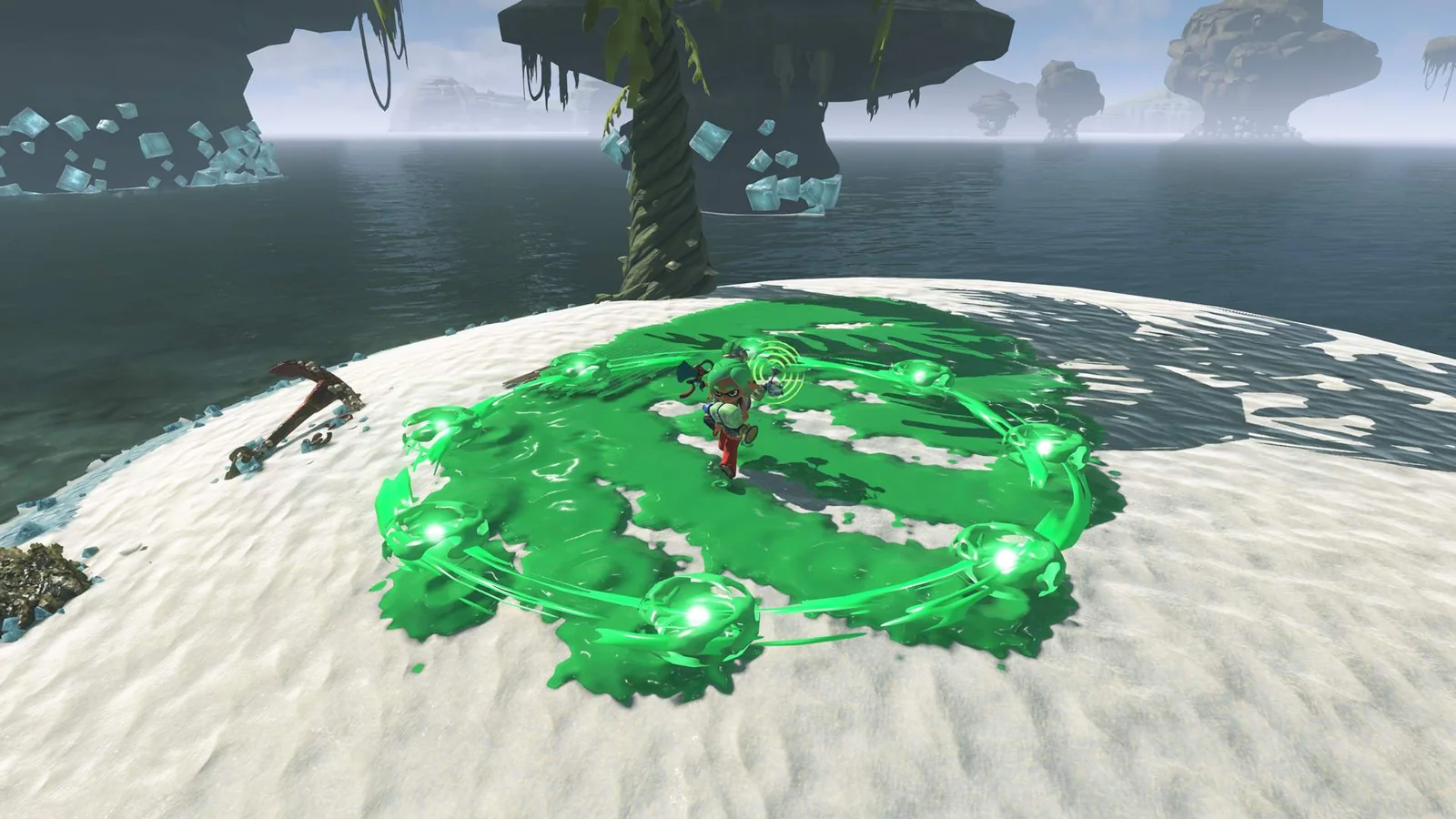
There is still no couch co-op on one television. “Local wireless” means nearby players each bring a Nintendo Switch 2 and a copy of Raiders. Splatoon 3 similarly requires a system and game per multiplayer participant. That distinction is important for parents or couples: two controllers and one console are not enough for either game's action multiplayer.
Choose Splatoon 3 co-op if your group enjoys timed waves, rotating conditions, and a job-like score chase. Choose Raiders co-op if your group wants to enter PvE missions inside one player's broader progression adventure. Some activities and Help options have unlocks or restrictions, so check the site's current multiplayer and co-op guide before planning an entire shared campaign weekend.
What Splatoon 3 gains on Nintendo Switch 2
You do not need to buy an upgrade pack for Splatoon 3. Nintendo released its free Switch 2 update on June 12, 2025. The official summary says the visuals are optimized for the Switch 2 display and high-resolution televisions for improved image quality. It also identifies smoother on-screen movement in hub areas such as Splatsville, Inkopolis, Inkopolis Square, and the Grand Festival Grounds.
The detailed patch notes add two useful specifics. Salmonid animations in Salmon Run can appear smoother when many enemies are present, and screenshots saved through Photo Mode or the Capture Button use a higher resolution on Switch 2. Those are meaningful refinements for a game full of moving ink and crowded scenes. They are not evidence that every battle runs at an advertised new universal resolution or frame-rate target, so claims such as “the whole game is 4K” should not drive your purchase.
Content compatibility is more important than a spec-sheet number. Nintendo confirmed that Switch and Switch 2 players can battle together. Version 10.0.0 also added Urchin Underpass, 30 Splatlands Collection weapon kits, higher Freshness caps, and Series Weapon Power; those content changes were not a separate Switch 2 purchase. On August 20, 2026, Nintendo released version 11.3.0 for both systems, evidence that balance and support continued after Raiders launched.
In practice, Switch 2 is the nicer place to play the existing game, not a reason to describe it as a remaster. Your old purchase and save remain relevant, friends on the original hardware are not walled off, and the competitive rule set stays shared. Raiders still has the stronger “new hardware showcase” argument because it was designed exclusively for Switch 2, including HDR output on compatible televisions. Choose that distinction for the new PvE structure and native release—not because Splatoon 3 suddenly became obsolete.
Online requirements and the real multiplayer setup
A paid Nintendo Switch Online membership is not required to play either included solo campaign. You can work through Splatoon 3's Story Mode or play Raiders alone without subscribing. Naturally, a digital purchase must first be downloaded, updates use an internet connection, and cloud backup is an online service; those are separate from whether the minute-to-minute solo mode requires membership.
For Splatoon 3, Nintendo Switch Online is central to the ordinary multiplayer experience. Turf War, Anarchy Battles, X Battles, and internet-based Salmon Run use the paid service. Nearby players can use local wireless for supported Private Battle and Salmon Run configurations, but each needs a compatible Switch-family system and a copy of the game. Local wireless is not a back door into all public online playlists.
Raiders requires the membership and a Nintendo Account for internet co-op features. Friend rooms, keyword rooms, Call for Help, and going online to assist other players all connect through the internet. Local wireless can avoid the online membership for a nearby squad, but each participant still needs a Switch 2 and game access. An original Switch cannot join Raiders, even though it can join Splatoon 3 players who are running that game on Switch 2.
Budget one subscription per account arrangement that needs online access, not merely one for the person who purchased the software. Nintendo offers individual and family memberships, and household sharing rules can change the best option, so check the live account terms instead of assuming a game purchase includes service. If you buy either title mainly to play with distant friends, the membership is part of its real first-year cost.
Finally, do not confuse Nintendo Switch 2's GameChat with a built-in game mode. It can make conversation and screen sharing more convenient, but it does not turn one Raiders copy into four copies, add split-screen, or replace Nintendo's multiplayer setup. Count consoles, copies, accounts, memberships, and the type of connection before promising a group game night.
Price, DLC, and total cost in 2026
On Nintendo's US store on August 28, 2026, Splatoon Raiders had a regular price of $49.99 USD, while Splatoon 3 was $59.99 USD. Splatoon 3's optional Expansion Pass cost $24.99, and Nintendo listed the base game plus pass bundle at $84.98. That makes Raiders $10 cheaper at official regular pricing and $34.99 cheaper than buying Splatoon 3 with all currently listed paid campaign DLC.
Those numbers do not automatically make Raiders the budget choice. It requires a Switch 2, while Splatoon 3 also works on an original Switch, Switch Lite, or OLED system. A household that already owns the earlier hardware can enter Splatoon 3 without buying a new console. Conversely, a Switch 2 owner does not pay for Splatoon 3's optimization update; it is free.
The Splatoon 3 Expansion Pass is optional. Wave 1 adds Inkopolis as a hub option, while Wave 2 contains Side Order, the replayable solo campaign. Buy it because you want that content, not because online battles or the included Return of the Mammalians campaign are locked behind it. Raiders had no paid DLC listed on its US product page at research time. Compatible amiibo can unlock outfits, but figures are optional accessories rather than a campaign requirement.
Multiplayer can be the expensive part. Distant play adds Nintendo Switch Online; nearby wireless adds one console and one game entitlement per person. Used physical copies and retailer discounts may lower the software price, and digital sharing/lending rules can affect a household, but those offers and terms move. For a current physical-versus-digital breakdown, check the site's Raiders price guide before checkout.
Which one should you buy? Five player profiles
- The competitive player: buy Splatoon 3. You get Turf War, objective modes, ranked progression, varied weapon kits, and opponents who keep the same maps unpredictable. Raiders has no competitive PvP substitute.
- The solo-first newcomer: buy Raiders. Its main progression happens at your pace, three difficulty settings change enemy strength without reducing loot, and Bot Buddy provides support. You can learn ink movement without making every mistake in front of a rival team.
- The PvE friend group: choose by session shape. Pick Splatoon 3 for compact Salmon Run shifts and a quick reset; pick Raiders for missions embedded in a host's longer equipment journey. Raiders scales player strength in multiplayer, but every participant still needs Switch 2 hardware and the game.
- The one-console household: buy for solo use, not couch multiplayer. Neither title provides split-screen action. Splatoon 3 offers its included solo story and Raiders offers a much larger solo-centered structure, but a second controller alone does not unlock co-op.
- The existing Splatoon 3 regular: buy Raiders if you want contrast. You already own the better PvP destination. Raiders gives familiar ink controls a different purpose through PvE, loot, Tanks, and Gadgets. If that loop does not appeal, the Switch 2 update keeps your existing game attractive at no extra charge.
Current Reddit threads ask these same preference questions, but comments are not reliable evidence of population size, matchmaking quality, or objective value. Treat another player's “best game” verdict as a description of their taste. Your best predictor is the mode you would start voluntarily on a quiet night: a match lobby, a Salmon Run shift, or a solo raid.
Should you own both games?
Yes—if you genuinely like both competitive matches and persistent PvE. Nintendo's developers describe Raiders as a spin-off that elevates noncompetitive Splatoon elements into a standalone experience, not as “Splatoon 4.” The two-game library therefore gives you an easy change of pace: play Splatoon 3 when you want the tension of opponents or a Salmon Run shift, then move to Raiders when you want progress that waits for you.
There is a small official bridge. Splatoon 3 version 11.3.0 added the Plastic-Bottle Shot Replica, obtainable from the lobby terminal after the same user has Raiders save data on that Switch 2 and has completed Raiders' main story. It is a nice acknowledgement, not a reason to spend another $49.99, and it is not broad cross-progression.
If buying in stages, start with the game whose main mode you want now. A nervous newcomer can learn fundamentals in either solo offering; Splatoon 3's Story Mode is specifically recommended by its developers as a learning route, while Raiders lets character strength and adjustable difficulty soften PvE walls. After choosing Raiders, the spoiler-aware campaign walkthrough can guide progression. If you still need an evidence-based quality check before purchase, use the site's Raiders review and score analysis rather than treating a single aggregate number as the verdict.
FAQ
Is Splatoon 3 a Nintendo Switch 2 game?
No. It is a Nintendo Switch release that is compatible with Switch 2 and has a free optimization update. You use the same software; there is no separately priced Splatoon 3 Switch 2 Edition on Nintendo's US listing.
Is Splatoon Raiders replacing Splatoon 3?
No. Nintendo's developers call Raiders a spin-off rather than Splatoon 4 and describe it as a focused, noncompetitive entry point. Splatoon 3 continued to receive balance updates after Raiders released. The two titles occupy different roles.
Can I play Raiders solo without Nintendo Switch Online?
Yes. Its campaign is single-player-focused, and paid membership is required for online features rather than ordinary solo raids. Downloading software or updates still needs an internet connection, and Save Data Cloud is a membership feature.
Does Raiders have competitive PvP?
No. Its multiplayer is cooperative PvE for supported raids, through online play or local wireless. If battling other players is your reason for buying a Splatoon game, choose Splatoon 3.
Which is better as a first Splatoon game?
Raiders is the gentler default for a solo-first player because difficulty and character growth provide adjustable ways through a challenge. Splatoon 3 is the better introduction to the main series' complete identity because it includes Story Mode, Salmon Run, and competitive battles. You do not need knowledge of earlier plots to make either purchase decision.
Final verdict: on Switch 2, choose Splatoon 3 for competitive breadth and choose Splatoon Raiders for solo-centered PvE progression with optional co-op. Buy both only when both sentences sound appealing. Prices, service terms, and software versions were checked on August 28, 2026; verify the live store before paying.

Loading comments...