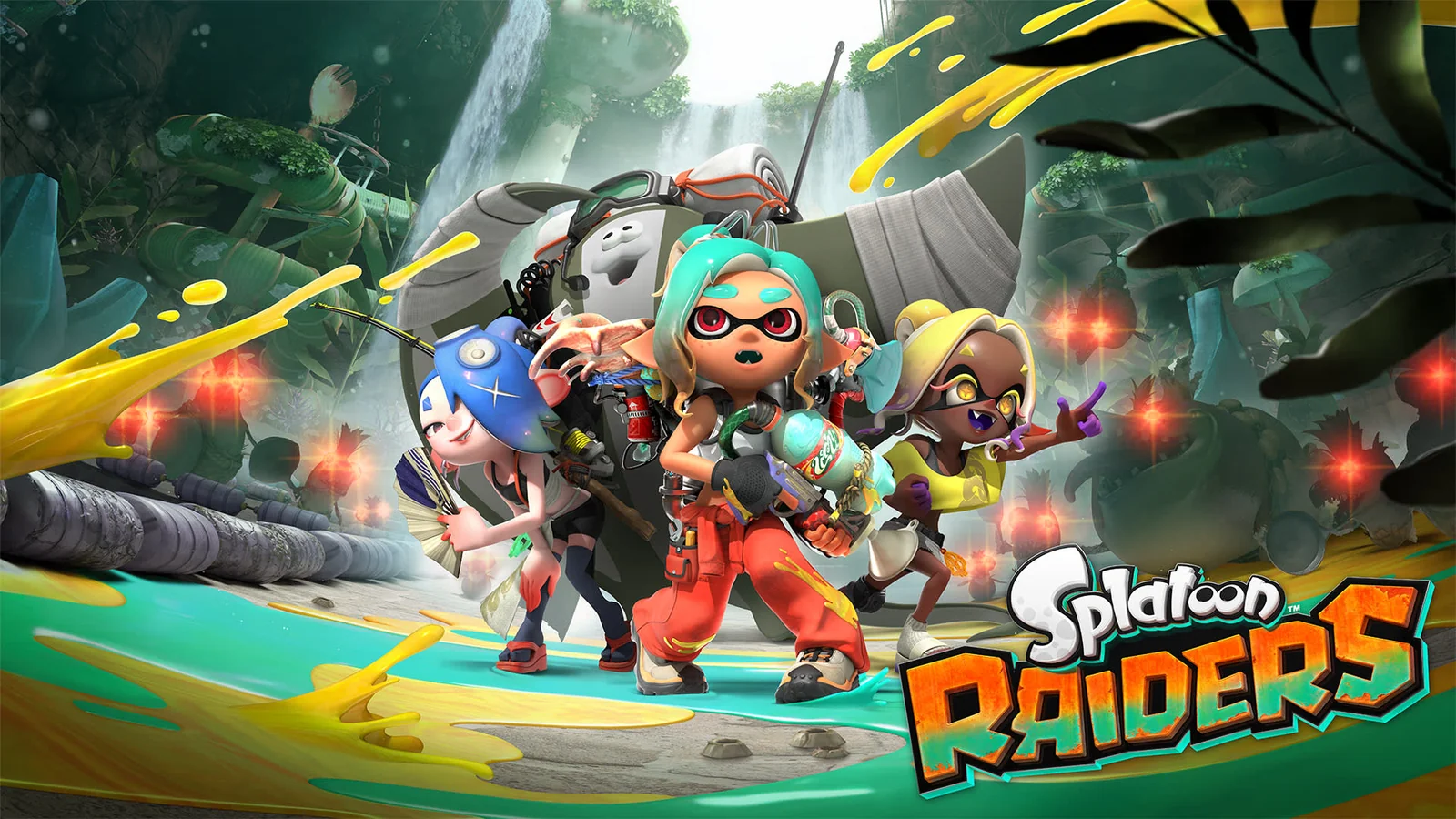
Splatoon Raiders earned a favorable critical consensus, but its unusually enthusiastic player rating says more about audience fit than it does about an objective gap in quality. As checked on August 28, 2026, the Nintendo Switch 2 page on Metacritic shows an 81/100 Metascore from 113 critic reviews and a 9.3/10 user score from 1,840 ratings. Both numbers can move as reviews and ratings are added, so treat them as a dated snapshot rather than permanent marks.
The short verdict is that Raiders works best for people who enjoy compact PvE missions, visible power growth, loadout experimentation, and a “one more run” reward rhythm. Published reviews repeatedly praise its ink-based combat and the way Tanks, weapons, Gadgets, and upgrades interact. The same loop creates the main warning: players who need constant environmental novelty, a story-led adventure, or competitive Turf War may find the repetition much sooner than its biggest fans do.
This page is an evidence-based synthesis of finished-game reviews and public rating pools; it is not a claim that our editorial team assigned a new hands-on score. It also covers Raiders as one game, not the series-wide Metacritic comparison. Nintendo describes it as a single-player-focused Switch 2 exclusive, while its launch information confirms optional online and local-wireless help for up to three additional players. That distinction matters. Solo progression fans and cooperative groups are the strongest match. Shoppers mainly seeking ranked or Turf War competition should look elsewhere, no matter how impressive the user score appears.
Score Snapshot: Metacritic, OpenCritic, and Major Reviews
Checked August 28, 2026: the safest way to read the review landscape is to keep each source's scale, sample, and audience attached. Metacritic's selected-platform view covers Switch 2 professional reviews. OpenCritic pools eligible publications under its own rules and separately reports how many critics recommend the game. Outlet scores are one reviewer's judgment. None is interchangeable with a voluntary reader rating.
| Source | Score | Platform or sample | What it represents |
|---|---|---|---|
| Metacritic critics | 81/100 | Switch 2; 113 reviews | Weighted professional-review aggregate |
| Metacritic users | 9.3/10 | 1,840 ratings | Self-selected site users |
| OpenCritic | 82/100; 86% recommend | 128 critic reviews in the indexed snapshot | Cross-platform critic average and recommendation rate |
| IGN | 9/10 | Review copy | Single outlet review |
| Nintendo Life | 9/10 | European Switch 2 version | Single outlet review |
| GameSpot | 8/10 | About 15 solo hours plus limited multiplayer | Single outlet review |
| Metro / The Guardian | 6/10 / 2 out of 5 | Individual reviews | Lower-scoring dissent |
The OpenCritic line deserves extra caution. Its canonical page was not directly readable in our research tool; 82, 86%, and 128 are the current figures exposed by an indexed database page that imports OpenCritic data. Launch-day threads captured averages around 79–81 from only 12–19 reviews, with recommendation rates in the mid-70s to 80%. That history shows why a review-embargo screenshot should never be passed off as today's result.
The most useful signal is the distribution, not a false precision contest between 81 and 82. The Nintendo Life roundup ranges from perfect scores through IGN and Nintendo Life at 9/10, GameSpot at 8/10, Metro at 6/10, and The Guardian at 2/5. That is a broadly positive field with meaningful dissent—not universal praise and not “mixed” in the everyday sense. The next question is why reviewers looking at the same loop valued it so differently.
What the Positive Reviews Consistently Praise
The clearest point of agreement is that Nintendo found a reward structure that suits Splatoon's movement and shooting. Ink still opens routes, restores mobility, and turns a busy battlefield into a positioning puzzle, but Raiders surrounds those familiar actions with visible RPG-style growth. Weapons, three Tank paths, Gadgets, Showstoppers, and modifier parts give players reasons to test combinations instead of simply choosing one shooter and clearing a linear campaign.
GameSpot's 8/10 review is especially useful because it explains the rhythm behind the score. It says stages are usually around ten minutes: long enough for threat prioritization and hectic Salmonid fights, yet short enough to return to the hub, inspect rewards, adjust a kit, and head out again. GameSpot spent approximately 15 hours with the solo game and another hour with multiplayer, so its favorable co-op note is encouraging but appropriately limited.
The 9/10 reviews emphasize breadth inside that loop. Nintendo Life highlights extensive play-style customization and a clever co-op arrangement in which each participant keeps an individual difficulty choice. TechRadar describes multiple mission formats, a growing home base, harder variants, online assistance, and more than one hundred weapons. These are not identical claims of endless novelty; together, they show why progression-minded reviewers kept finding the next concrete goal.
Difficulty flexibility also broadens the appeal. A newer player can lower the pressure, learn how enemy ink constrains movement, and lean on help without erasing a more experienced partner's challenge setting. A systems-focused player can chase synergy, specialize a Tank, or deliberately test unfamiliar gear. Readers who want the practical side of that experimentation can use our Splatoon Raiders builds guide; the important review takeaway is simply that choices affect how raids feel.
Finally, favorable reviews tend to treat co-op as an amplifier rather than a rescue plan. Raiders remains designed to be completed solo, while friends can make high-density encounters more social and create complementary loadout roles. That is a strong match for a single-player-first spin-off. It is not evidence that Raiders replaces the competitive modes that made the main series famous.
Why Some Critics Scored It Much Lower
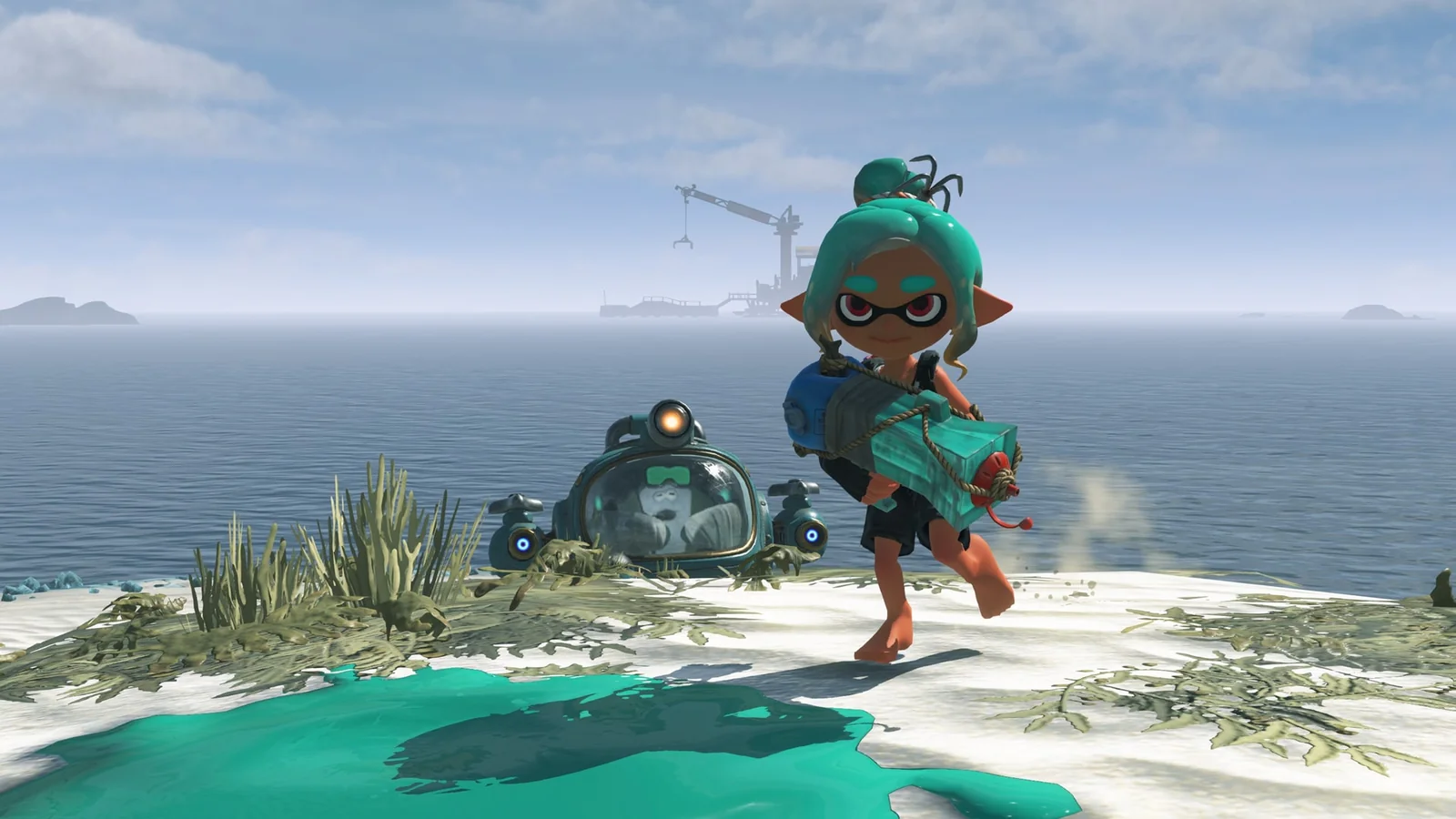
The lower scores are easier to understand when separated from the headline numbers. They rarely argue that Raiders is broken or unpleasant to control. Instead, they question whether its rewards can carry a game built around revisiting a relatively narrow set of actions. If opening a chest, raising stats, and refining a loadout feels intrinsically satisfying, repetition becomes momentum. If a player needs a new location, enemy concept, or narrative turn to motivate each session, the same structure can feel padded.
The Guardian's 2/5 review presents the sharpest version of that criticism. It acknowledges that augmentable Gadgets eventually make the combat more expressive, but argues that the game takes too long to reveal the possibilities, expects substantial replay, and gives its Deep Cut adventure too little narrative weight. That is not the same as saying there are no choices or challenges. It says the payoff arrived too late, and the surrounding context was too thin, for that reviewer.
More favorable critics identify related weaknesses without treating them as fatal. Game Informer's 8.75/10 review says repetition in mission types and music became noticeable by the campaign's end. GamesRadar enjoyed the conversion but found that a later difficulty jump could turn earlier areas and multiplayer into an experience grind. GameSpot's 8/10 review points to a different progression cost: after investing heavily in favored Tanks and Showstoppers, swapping to an undeveloped route can feel punitive because that experience does not automatically carry over.
There is also a disagreement about ambition. ComicBook's review sees a competent but simplistic looter shooter that does not establish enough of its own identity. Other outlets see the combination of ink movement, huge Salmonid crowds, and flexible builds as precisely the distinctive idea. Both readings can be sincere. A polished spin-off is not automatically a dramatic Switch 2 showcase, and a familiar foundation is not automatically creatively empty.
For a prospective buyer, the low-score case is therefore useful rather than anomalous. Ask what normally keeps you playing: better tools and tougher mastery tests, or fresh scenery and story beats? Raiders puts far more weight on the first answer. Readers who already dislike loot-driven repetition should not assume the 9/10 reviews will erase that preference.
Critic Score vs User Score: What the Gap Really Means
Metacritic's 81 critic score and 9.3 user score look like a 12-point disagreement when both are placed on a 100-point scale. That arithmetic is easy; its meaning is not. On August 28, the critic pool contained 113 professional reviews: 96 positive, 16 mixed, and one negative. The user pool contained 1,840 voluntary ratings: 1,719 positive, 30 mixed, and 91 negative. Those groups were recruited differently, evaluated the game under different conditions, and did not necessarily reach the same amount of content.
The user result is still a meaningful popularity signal. It shows that people motivated to rate Raiders on Metacritic have responded exceptionally well. It does not prove that a representative 93% of Switch 2 owners would assign the same mark. Enthusiastic Splatoon fans may be more likely to buy and rate a spin-off at launch; people who dislike the premise may never purchase it. Conversely, dissatisfied owners can be especially motivated to post. The aggregate alone cannot measure either effect, so claims of “fan boosting” or “review bombing” require evidence beyond a high or low number.
Individual user reviews help explain tastes, not prevalence. Positive Metacritic posts describe satisfying technical combat, deep build interactions, smooth co-op, and a loop that makes them want more. Lower-scoring posts complain about repeated Salmon Run-like encounters, similar island spaces, light story or music, and insufficient value. Those are real reports by particular users. They should not be rewritten as “players agree” unless a properly sampled survey exists.
A second reader pool points in the same favorable direction without solving the sampling problem. Nintendo Life showed an 8.6/10 community rating from 394 ratings when checked, while its editorial reviewer gave the game 9/10. That is useful corroboration that enthusiasm is not confined to one page. It remains a separate website, scale, and self-selected audience; adding its 394 ratings to Metacritic's 1,840 would produce a meaningless homemade average.
The practical reading is modest: critics broadly recommend Raiders, and the players volunteering ratings are even more enthusiastic. Use the critic spread to identify tested strengths and weaknesses, then use player reviews to see whether people with tastes like yours keep enjoying the loop. Do not use the gap itself as proof that professionals “missed” the game.
Metacritic, OpenCritic, and IMDb Measure Different Things
Review sites can all display a number out of ten or one hundred while answering different questions. Metacritic says its Metascore is a weighted average of selected professional reviews. For Raiders, the relevant page is the Switch 2 platform view with its stated review count. Its user score sits alongside that figure, but it comes from registered visitors rather than the publications used for the Metascore.
OpenCritic's Top Critic Average normalizes eligible numeric reviews to a 100-point scale. Its Critics Recommend percentage asks a second question: what share of included reviews met its recommendation rules? An 82 average and 86% recommended therefore do not mean “86 out of 100.” One describes the average strength of numeric verdicts; the other describes breadth of recommendation. OpenCritic's publication pool and treatment of reviews also differ from Metacritic's, so a one-point difference is not an error to resolve.
IMDb is farther removed from professional game criticism. Its official rating help says the displayed title score is a weighted average of registered-user votes, not a simple mean, and that not every vote necessarily has equal impact. On August 28, indexed IMDb surfaces for Raiders were inconsistent: the main ratings result showed 8.3/10 from 29 ratings, while a localized title result showed 8.2/10 from 59. With such a small and shifting sample, IMDb is a weak supplementary fan signal—not a competitor to 113 professional reviews.
- Use Metacritic when you want the current platform-specific professional aggregate and a large, separate user pool.
- Use OpenCritic when you want a cross-publication critic average plus the breadth of recommendations.
- Use IMDb cautiously when you are curious about that entertainment database's users; do not label it a review-critic score.
- Read actual reviews when deciding whether repetition, co-op, story weight, or build depth fits you. No aggregate preserves all of that context.
The denominator is often more informative than the decimal. A 0.1 move in a few dozen IMDb votes can happen quickly; a one-point change in a hundred-plus critic aggregate reflects a different scale of evidence. Always capture score, source, sample, platform, and date together.
Replayability: Strong Loop, Conditional Long-Term Value
Raiders has much more replay structure than a finish-once corridor campaign, but it does not promise competitive multiplayer's effectively endless supply of human opponents. Its longevity comes from a different bargain: repeat compact missions at higher pressure, improve gear, refine builds, complete optional goals, collect missing equipment, and sometimes bring other players into the PvE loop. That can support dozens of hours for the right person and still feel complete much earlier for someone satisfied at the credits.
Published time estimates illustrate the range. Nintendo Life places a minimal story route at just under ten hours and a route covering most missions as they unlock at about 15. GameSpot estimates roughly 15–18 hours for an average run with moderate optional activity, while pursuing its demanding post-campaign material can push beyond 40 hours. These are editorial estimates, not a timer built into the game. Difficulty, failed attempts, co-op, collection goals, and the desire to optimize all change the result. Our game-length guide keeps those scenarios separate.
The strongest replay driver is the connection between a short attempt and a visible decision afterward. A new modifier may alter a Gadget's purpose; a weapon drop may justify a different range; a failed raid may reveal that survival matters more than raw damage. Returning to base becomes a planning beat rather than dead time. Higher difficulty variants then test whether a build is genuinely coherent. Optional co-op adds another variable because roles and enemy pressure change when help joins.
The limitation is that systems depth does not automatically create content variety. The same player who enjoys tuning a build can tire of familiar objectives, islands, or enemy groups. GameSpot also flags a specific experimentation tax: putting most experience into favored Tank and Showstopper paths can leave alternatives feeling underpowered as stages escalate. For a completionist, the next upgrade is a goal. For a novelty-first player, it can look like work required to replay content already understood.
That is why “does it have an endgame?” and “will I enjoy the endgame?” need different answers. Yes, there are substantial challenges and progression after the main route. Enjoyment depends on whether mastery, difficulty, loot, and build refinement are rewards in themselves. Our spoiler-controlled post-game and endgame guide explains the activities without forcing those details into this review.
A sensible value test is to ignore the theoretical maximum. If a 10–18-hour solo campaign with optional co-op already sounds worthwhile, the later material is upside. If purchase value depends on enjoying 40-plus hours, read the repetition criticisms closely and try to identify whether you normally replay missions for stronger gear. Raiders has replayability; it is not equally valuable replayability for every motivation.
Who Should Buy, Wait for a Sale, or Skip
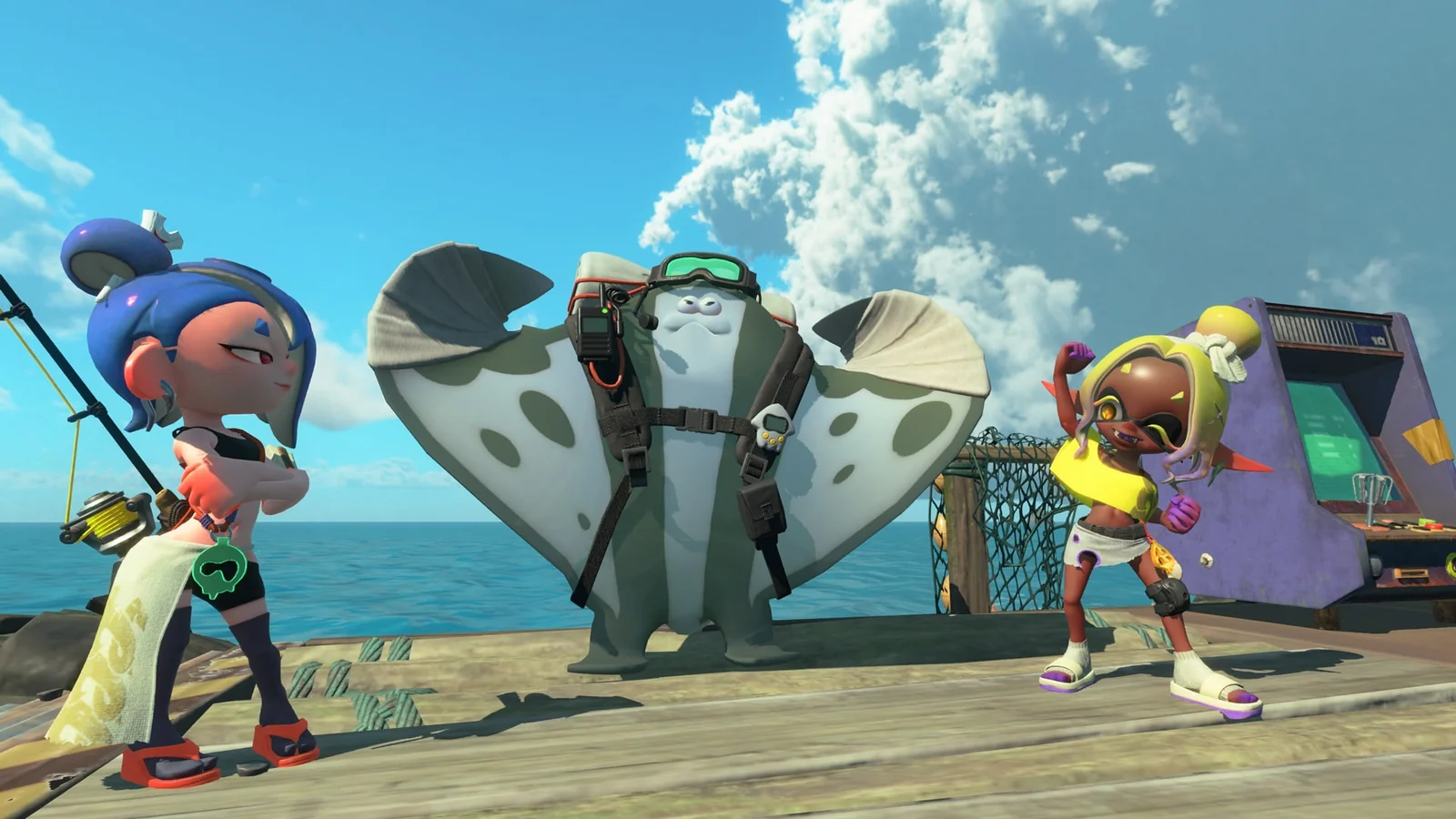
Buy now if compact PvE missions and buildcrafting are already the pitch. Raiders is unusually well suited to someone who likes a clear solo route but appreciates optional help, or who wants Splatoon's movement without the stress of facing another team. It is also a strong co-op fit when each participant owns the required hardware and game. Nintendo's official product page lists one player on a single system and 2–4 players through local wireless or online; local wireless requires additional systems and games.
Online play adds another cost consideration. Nintendo says online features require a Nintendo Account, internet access, and a Nintendo Switch Online membership sold separately. The solo adventure does not require that subscription. If co-op is central to your purchase, read our multiplayer guide before assuming one console supports a couch group or that matchmaking behaves like a permanent party system.
Wait for a sale if you like the combat but are unsure about repeating objectives. Around the August 28 check, US pricing was commonly listed at $49.99 digital and $59.99 physical; region, retailer, stock, and promotions can change those figures. A discount does not fix mission sameness, but it can make a finite campaign easier to justify when the post-campaign grind is unlikely to hold you. Waiting also gives you time to read longer-term player reports instead of relying only on launch-window enthusiasm.
Skip it if “Splatoon” primarily means competitive Turf War to you. Raiders has cooperative multiplayer, not a replacement competitive ladder. Skip as well if you own only the original Switch: this release is exclusive to Switch 2. Our game information guide covers the platform and product basics without making you dig through review copy.
There is one more fit check that scores cannot solve. If Splatoon's ink aiming, swimming, bright visual language, or horde combat has never felt good to you, this spin-off adds progression rather than discarding that foundation. Nintendo Life and TechRadar both warn in different ways that Raiders is unlikely to convert someone who fundamentally dislikes the core feel. Meanwhile, a newcomer attracted by PvE does not need extensive series history to understand the loop.
The safest buying hierarchy is therefore simple: first confirm hardware and mode expectations, then decide whether the campaign alone earns the price, and only then count endgame or co-op as additional value. That prevents a 9.3 user score from talking you into a genre you do not enjoy—and prevents one 2/5 review from scaring away a player who is exactly the target audience.
Final Verdict: An 81 That Fits Some Players Like a 9
Splatoon Raiders' 81 Metascore is a sensible center for a game whose execution is widely respected but whose purpose divides reviewers. The strong case is coherent: expressive ink movement, readable chaos, short raids, frequent rewards, meaningful build choices, scalable difficulty, and optional co-op form a polished PvE loop. IGN and Nintendo Life's 9/10 scores make sense for players who experience repetition as a chance to refine that loop.
The skeptical case is coherent too. Familiar locations and goals can outlast their novelty, the story is not the primary engine, and progression sometimes makes a switch to less-developed equipment feel expensive. For someone who wants constant new scenarios or competitive Turf War, the same structure that creates focus for one reviewer creates narrowness for another. An 81 is not a mathematical instruction to enjoy those priorities.
Our evidence-led verdict is therefore buy for the loop, not for the score. Raiders is an excellent match for a Switch 2 owner seeking solo-first action, buildcrafting, and missions that fit short or long sessions. It becomes more attractive if optional co-op and high-difficulty optimization sound like bonuses. Wait if value depends on long-term novelty, and skip if the missing competitive game is the activity you actually want.
The much higher Metacritic user rating strengthens the case that Raiders found an enthusiastic audience; it does not turn audience fit into universal quality. All dynamic figures in this review were checked August 28, 2026. Even during that same research session, Metacritic's opened page and an indexed snapshot disagreed slightly about the user score and count. Check the live source for the latest number, keep the denominator attached, and let the reasons behind the reviews make the purchase decision.

Loading comments...