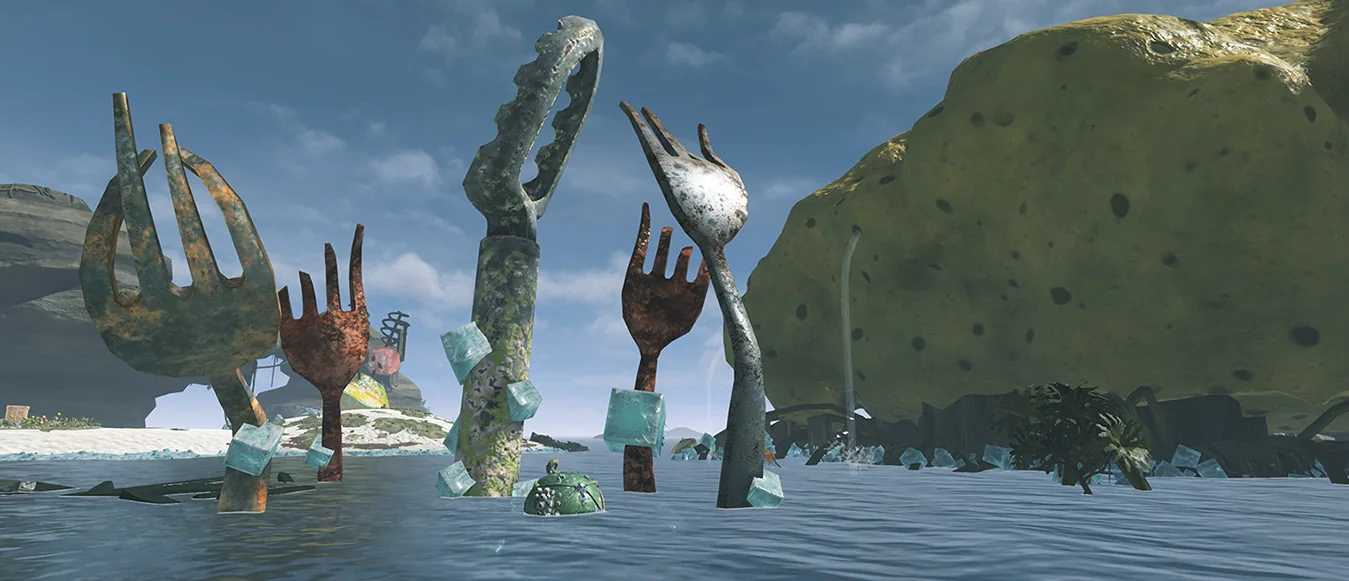
Most players will reach the first credits in roughly 10–18 hours. A direct route can land near the low end, while clearing most missions as they appear, experimenting with equipment and stopping for upgrades usually pushes a first run toward 15 hours or a little beyond. If you continue through the substantial post-game story, a more realistic total is around 30–45 hours. A literal completion run can take much longer because weapon drops, Gadget Parts, high-difficulty clears and repeatable endgame goals do not fit a neat fixed checklist.
The important question is therefore not only “How long is Splatoon Raiders?” but “Which ending point do you mean?” This guide separates the first credits, the post-game narrative finish and a broad 100% pursuit. The estimates are ranges drawn from finished-game reviews, specialist guides and clearly labeled player reports; Nintendo does not publish an official hours-to-beat figure. You can read the opening sections without story spoilers. The post-game section warns you before it names late activities.
Splatoon Raiders length at a glance
The table below is a planning tool, not a promise. The same player can add hours simply by changing from a direct story route to clearing every newly revealed island, testing a fresh weapon after each drop, or retrying a hard den on Survivalist. Conversely, an experienced Splatoon player who stays on the critical path can reach the first credits notably sooner than a newcomer learning movement and aiming from scratch.
| Finish line | Reasonable planning range | What it includes |
|---|---|---|
| Direct story route | About 9–12 hours | Enough missions and upgrades to reach the first credits, with limited detours. |
| Typical first playthrough | About 12–18 hours | Most visible story missions, natural gear testing and some optional challenges. |
| Post-game narrative finish | Roughly 30–45 hours total | First credits plus late challenges, build improvement and the major post-game objective. |
| Broad completion run | About 50–80+ hours | Large-scale mission cleanup, upgrades, collectibles and meaningful build experimentation. |
| Exhaustive “everything” goal | Potentially 100+ hours | Rare randomized variants, extensive high-difficulty clears and self-imposed endgame targets. |
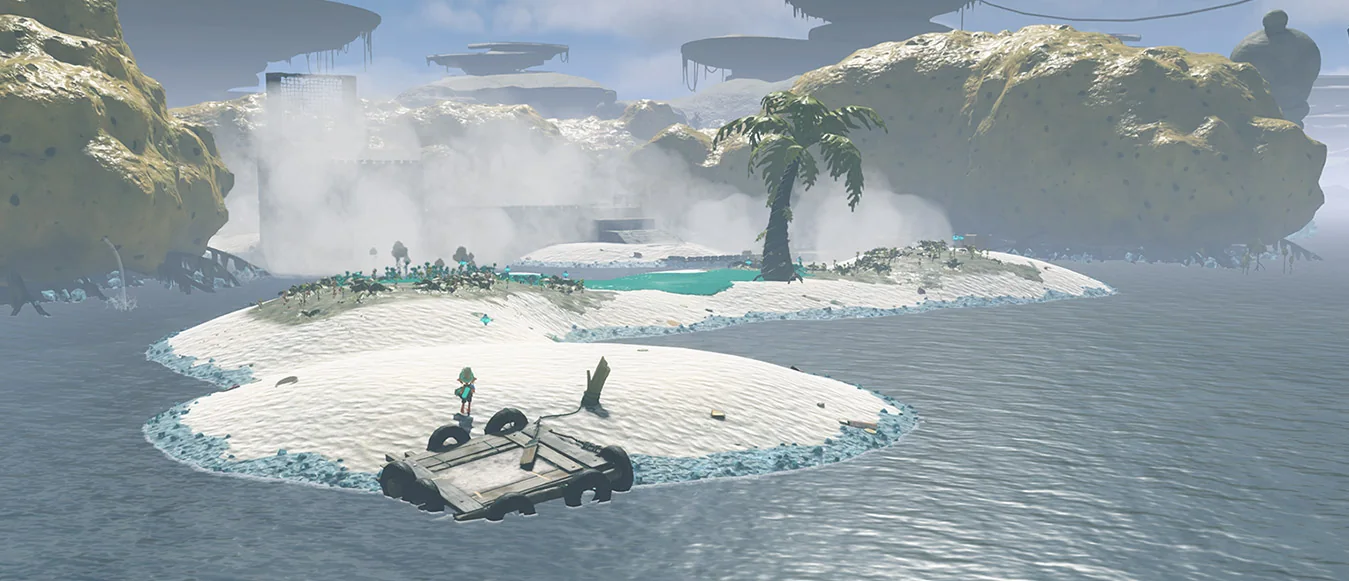
The first two rows are supported by multiple finished-game reviewers: Nintendo Life places a minimum route just under ten hours and a fuller route around fifteen, while GameSpot uses a 15–18 hour average. The post-game rows are less exact because progression depends on the quality of your loadout and your appetite for farming. Treat 30–45 hours as a sensible story-plus-post-game budget, not a requirement to grind every icon.
The last row is deliberately open-ended. One player reported 145 hours for a strict personal definition of 100%, with most of that time spent repeating content for remaining collection goals. That report proves the ceiling can be very high; it does not mean a normal completionist must spend 145 hours. If your goal is seeing the principal story content and completing the designed late-game route, stop using “every possible drop” as your yardstick.
How long the main story takes
A first-credits run is usually a 12–18 hour game when played naturally. “Naturally” means completing enough neighboring missions to stay comfortable with the recommended Salmonid level, returning to the Hideout to inspect useful drops, and sampling different mission types instead of beelining every story marker. Players already fluent in Splatoon movement can trim that total. A newcomer may spend longer learning how painting, swimming, refilling ink and repositioning work together.
Route choice is the largest variable. The world map can offer more than one useful destination, and the game rewards curiosity with equipment, Power Eggs and resources. Clearing most stages as they appear pushes the clock toward fifteen hours because you are doing more actual content, not because the critical path suddenly slows down. A minimum route nearer ten hours leaves optional dens, raids and dungeons for later. Neither approach is wrong: the direct route suits story-first players, while the fuller route usually produces a smoother power curve.
Difficulty changes the time in a less predictable way. Tourist, Raider and Survivalist alter how demanding the fights feel, but the harder option is not automatically slower for every expert. A confident player may clear Survivalist cleanly, while another loses far more time to retries or cautious play. Because difficulty can be changed, a sensible time-saving move is to lower it when one encounter stops being enjoyable. There is no value in turning a fifteen-minute wall into a two-hour wall merely to protect an initial menu choice. Our beginner guide explains the fundamentals that reduce avoidable retries.
Co-op can shorten hard fights yet add preparation and coordination time. Up to four players can bring separate builds, and enemy strength scales for the group. A coordinated party may erase a solo bottleneck; a casual group may spend longer comparing loadouts or waiting at the Hideout. Use the multiplayer guide if your time estimate assumes playing with friends. Most importantly, do not compare a co-op-heavy save directly with a reviewer’s solo clock without accounting for that difference.
How much time the post-game adds
Mild post-game spoilers begin here: this section names activities unlocked after the first credits, but it does not reveal the ending or final boss. If you only needed the purchase-length answer, budget around 30–45 hours for the main campaign plus the principal post-game route and stop reading until you have rolled credits.
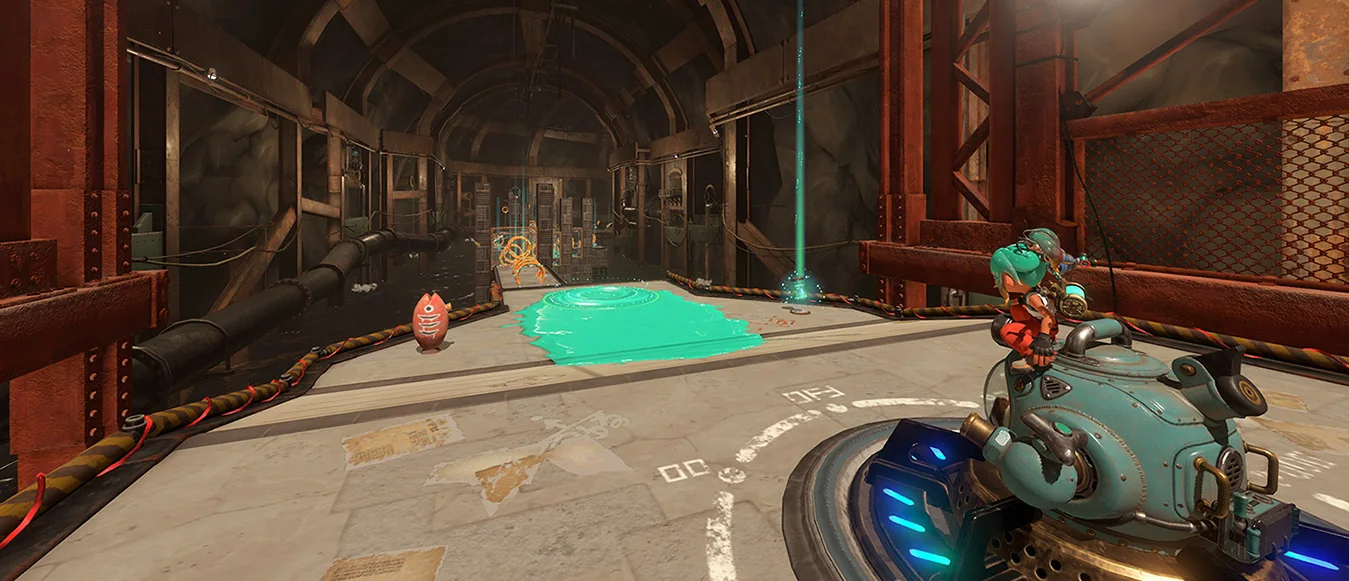
After the first credits, the game opens Super Spicy versions of earlier content and a route through three Hidden Ruins. Completing the relevant Tank challenges leads into Bottomless Buffet, whose major narrative target sits at floor 100. Nintendo Life estimates that reaching that target can add ten hours or more to the base campaign. GameSpot’s broader finished-game estimate says the post-game campaign can push a save past forty hours. Those figures describe different player behavior: ten additional hours is an efficient lower-bound route, while forty-plus total allows more preparation, failures and equipment work.
The Hidden Ruins are not just extra map pins to erase. Their Tank-specific constraints ask you to use systems you may have neglected during the story. If your Power build carried the campaign but your Speed and Tactical options remain underdeveloped, the clock includes time learning those rhythms and improving compatible Gadgets. Bottomless Buffet then turns loadout quality into a pacing variable. A player with a stable weapon and sensible Parts can progress steadily; someone repeatedly changing an underfunded build may pause to farm, upgrade and test.
Super Spicy missions are another source of confusion in length estimates. They are meaningful high-difficulty remixes and useful progression opportunities, but they are not the same as the direct line to the post-game story finish. Clearing every one before advancing can add many hours. If you want the ending efficiently, use them selectively when you need experience, equipment or a break from the next late-game wall. If you want mastery, treat them as a separate completion category.
Our dedicated post-game guide gives the activity order and spoiler boundaries in more detail. For planning purposes, reserve at least another ten to twenty hours after credits, then expect the total to rise if you insist on solo clears, remain on the toughest available rules, or chase upgrades before each Bottomless set. The post-game is substantial, but the game never requires you to convert every repeatable challenge into a job.
What 100% completion actually means
Splatoon Raiders does not give every player the same obvious, finite definition of 100%. The post-game story has a clean target at Bottomless Buffet floor 100, but the activity continues with randomized challenges after that point. Weapons also arrive as loot with levels, rarities, powers and variants. Once random drops and an endless destination enter the calculation, “all content” and “all possible outcomes” stop meaning the same thing.
A practical way to set your goal is to choose one of three completion standards:
- Story complete: reach the first credits, finish the Hidden Ruins route and clear the floor-100 narrative objective.
- Checklist complete: add the fixed missions, major upgrades, Relics, discoverable Gadget Parts, outfits and other finite records you personally care about.
- Exhaustive collection: pursue rare or Primo weapon variants, maximize systems, clear every high-difficulty remix and keep setting Bottomless milestones after its story endpoint.
The first definition fits the 30–45 hour planning range. The second can move comfortably beyond fifty hours because cleanup exposes underused Tanks and requires targeted replay. The third can exceed one hundred hours, and it may still depend on how strictly you count random weapon rolls. That is why an individual 145-hour completion report is informative but cannot be converted into an average.
Before chasing the exhaustive version, ask whether the remaining task produces a new decision or only another lottery pull. Finding an undiscovered Gadget Part can expand a build in the Tank and Gadget Explorer. Repeating one mission for hours in hope of a perfect weapon name may change a number without creating a new experience. Both are valid goals, but they should not share one compulsory “true completion” label.
A useful stopping point is when you have seen the story, cleared the designed challenges that interest you and built at least one strong loadout for each Tank you enjoy. If a menu still has blank spaces, treat them as optional collection goals. Completion is clearest when you write your finish line before the grind begins rather than moving it every time a new possible drop appears.
How to finish faster without flattening the fun
The quickest enjoyable route is not a blind sprint past every chest. It is a route that collects enough power during normal play to avoid a long correction grind later. Pick up nearby Power Eggs and worthwhile treasure, but give yourself a simple detour rule: if the reward is visible or takes less than a minute, collect it; if exploration starts turning the mission into a full sweep, return after credits. That balance keeps the story moving while feeding the upgrade loop.
- Consolidate one dependable loadout. Keep experimenting, but direct scarce upgrade resources toward one weapon and Gadget pairing that handles ordinary crowds and bosses. Five half-funded builds usually cost more time than one reliable baseline.
- Rotate away from a wall. If you fail the same raid repeatedly, clear a different available mission or replay a short stage with useful rewards. You keep meaningful progression from failed attempts, so a loss is information, not a demand to restart the entire campaign.
- Change difficulty deliberately. Lowering the setting for a specific story obstacle is faster than farming only to preserve pride. Raise it again when you want the challenge.
- Use co-op for the right problem. Friends help when survival or simultaneous threats cause the failure. They do not automatically fix an unfocused build or a missed objective.
- Delay perfect-roll farming. A good weapon at the current level moves the campaign forward. Spending early hours hunting a hypothetical final roll is inefficient because later drops and management systems change the comparison.
Use the Tank and Gadget Explorer before investing in a pairing, then test it in the Hideout rather than learning its cooldowns during a timed objective. A two-minute controlled test can save several failed runs. Compare movement, ink recovery, safe damage and crowd control—not only the biggest damage number on a stationary target.
Finally, plan in mission-sized sessions. Many raids are compact enough to finish in roughly five to fifteen minutes, which makes the game friendly to short play periods. A player who completes two focused raids and performs one upgrade check often progresses faster than someone who spends an hour rearranging every new drop. Efficiency here means making more useful decisions, not removing the exploration and tinkering that give the campaign its character.
Game-length FAQ
Can Splatoon Raiders be finished in a weekend?
Yes. A direct first-credits route of roughly 9–12 hours fits a focused weekend. Seeing most campaign missions is more comfortable across several sessions, and the post-game is better treated as a longer project.
How long is one raid?
Many ordinary raids take about five to fifteen minutes, although multi-stage dungeons, exploration and difficult retries can run longer. The short mission structure makes the game easier to play in small blocks than its total hour count suggests.
Does Survivalist make the game much longer?
It can. Higher pressure creates more failed runs and makes build weaknesses matter sooner. Skilled series veterans may see a smaller difference. Because the story difficulty can be changed, you control how much that challenge affects your campaign clock.
Is co-op faster than solo?
Sometimes. A coordinated group can solve combat bottlenecks quickly, but enemy scaling, preparation and communication can offset the advantage. Co-op is best viewed as a different way to play, not a guaranteed speed shortcut.
Is there anything to do after 40 hours?
Yes. High-difficulty versions, equipment collection, Gadget Parts, Relics, helping other players and Bottomless progression can carry a save far beyond forty hours. Whether that feels rewarding depends on how much you enjoy replaying raids and optimizing randomized loot.
What is the shortest honest answer?
Plan on about 15 hours for the campaign and 30–45 hours for the main story plus its post-game conclusion. Add more only if your idea of completion includes extensive high-difficulty cleanup or rare-drop collection.

Loading comments...