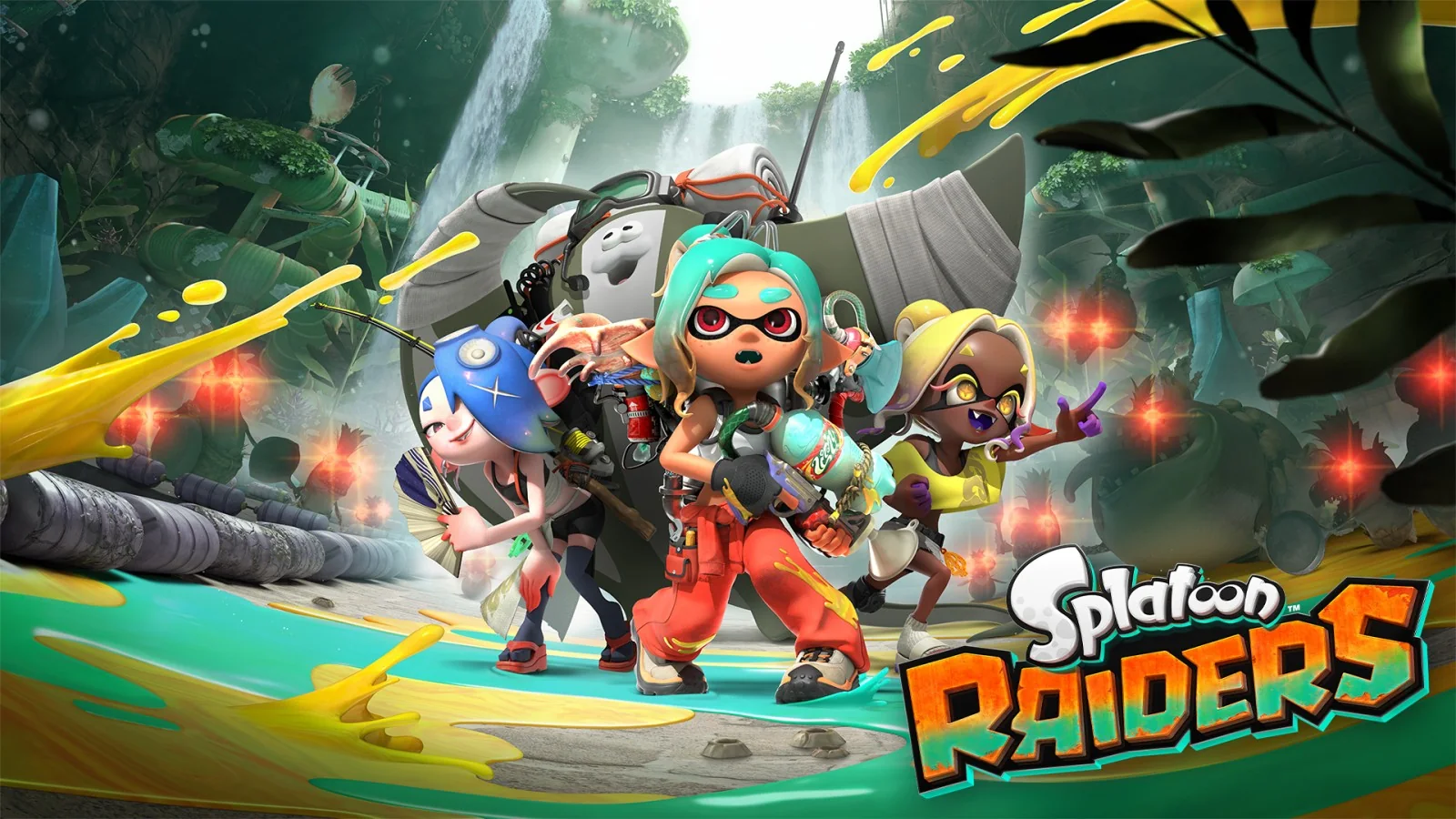
Splatoon 2 and Splatoon 3 are tied for the series' highest Metacritic critic score at 83. As checked on August 28, 2026, the original Splatoon and Splatoon Raiders share the next position at 81, while the Splatoon 3 DLC Side Order sits at 78. That makes Raiders two points behind the numbered-series leaders—not a dramatic critical collapse, and not a new franchise high.
This ranking uses the Metascore shown for each release's Nintendo platform: Wii U for Splatoon, Nintendo Switch for Splatoon 2, Splatoon 3, and Side Order, and Nintendo Switch 2 for Raiders. Ties remain ties. Critic-review counts are context, not a hidden tiebreaker, and Side Order's smaller DLC review pool is not treated as equivalent in scope to a full retail game.
The figures below are a dated snapshot. Metacritic can add reviews or revise displayed counts, while user scores can move every time someone rates a game. OpenCritic numbers are shown separately because its Top Critic Average and recommendation percentage answer different questions. If you want a deeper verdict on the newest spin-off rather than a franchise scorecard, read our dedicated Splatoon Raiders Metacritic and review analysis.
Every Splatoon Metacritic score ranked
The cleanest franchise ranking uses one field: the Metascore in each Nintendo platform's main critic panel. It produces two ties. Splatoon 2 and Splatoon 3 share first place at 83, while Splatoon and Splatoon Raiders share third place at 81. Side Order follows at 78. The table uses standard competition ranks, so the positions after the ties are 3 and 5 rather than 2 and 4.
| Rank | Release | Reviewed version | Metascore | Critic reviews | User score | User ratings |
|---|---|---|---|---|---|---|
| 1 (tie) | Splatoon 2 | Nintendo Switch full game | 83 | 100 | 8.4/10 | 1,692 |
| 1 (tie) | Splatoon 3 | Nintendo Switch full game | 83 | 115 | 7.4/10 | 963 |
| 3 (tie) | Splatoon | Wii U full game | 81 | 88 | 8.7/10 | 1,594 |
| 3 (tie) | Splatoon Raiders | Nintendo Switch 2 full game | 81 | 113 | 9.2/10 | 1,850 |
| 5 | Splatoon 3: Side Order | Nintendo Switch DLC | 78 | 22 | 7.8/10 | 151 |
Metacritic snapshot checked August 28, 2026. Critic counts come from each platform's main score panel; some separate “All Platforms” widgets currently show larger totals for the same releases.
The four-point spread from first to fifth is narrow, but the products and samples are not uniform. Side Order is an expansion reviewed by 22 critics, whereas the full games have 88–115 reviews in their main panels. Raiders has a larger critic pool than the original even though both display 81. Neither fact changes the rank: review count describes the breadth of the sample; it does not add bonus points to the score.
User ratings are included for reference, not folded into the ordering. Their 0–10 scale and self-selecting audience differ from the professional Metascore. Raiders' 9.2 user score is the highest in this snapshot, but that does not turn its 81 critic score into a franchise-leading Metascore.
Metacritic vs OpenCritic: what the numbers actually measure
A score table becomes misleading if every number is treated as the same kind of vote. Metacritic describes its Metascore as a weighted average of published critic reviews. Its support documentation says some critics and publications receive more weight based on quality and stature. It also states plainly that visitor votes are not included in that calculation; those appear separately as the User Score.
| Metric | Who contributes | Scale | What it helps answer |
|---|---|---|---|
| Metacritic Metascore | Eligible professional critics, with weighting | 0–100 | How the site's critic panel scored this platform/version |
| Metacritic User Score | Site users who choose to rate | 0–10 | How participating users rate it at this snapshot |
| OpenCritic Top Critic Average | Numeric reviews in OpenCritic's qualifying critic pool | 0–100 | The average scoring level among included top-critic reviews |
| OpenCritic Critics Recommend | Included critic verdicts | Percentage | How broadly critics gave a positive/recommended verdict |
The OpenCritic fields answer two different questions. An average describes the level of scores; Critics Recommend describes how widely positive verdicts are distributed. A game could therefore have a solid average but a lower recommendation percentage if more critics land on the negative side of OpenCritic's recommendation rule. Conversely, broad approval does not mean every review awarded an especially high number.
Compare like with like. Use Metascore against Metascore for the primary ranking, OpenCritic average against OpenCritic average for a secondary check, and recommendation percentage against recommendation percentage. Do not average a Metascore with a user score, and do not describe 80% recommended as an 80/100 review score.
The services can also index different publications and different numbers of reviews. That is why a one-point Metacritic/OpenCritic difference is not an error that needs to be “fixed.” It is a result produced from another pool and method. Aggregates are best used as maps to the consensus and its outliers—not as laboratory measurements precise enough to declare that an 83 game is objectively two units better than an 81.
Why Splatoon 2 and Splatoon 3 share the top Metascore
Splatoon 2 and Splatoon 3 arrive at the same 83 through related but not identical critical stories. Reviewers generally saw Splatoon 2 as the original idea rebuilt into a stronger Switch package. Salmon Run added a substantial cooperative pillar, handheld play widened where the formula worked, and new weapons, maps, ranked options, and a fuller solo offering made the sequel easier to recommend as a complete game.
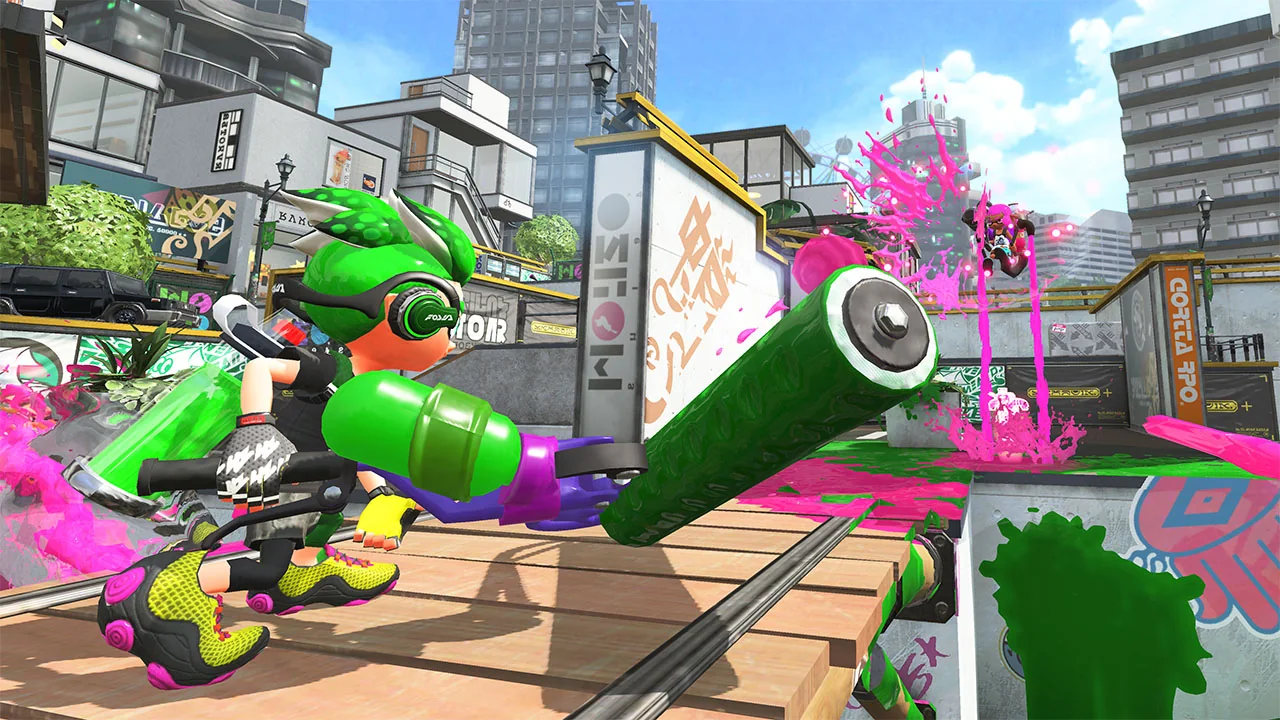
The reservation was visible inside the praise. Several critics described it as closer to a polished continuation than a radical sequel. Voice chat through the Switch phone app, rotating availability for Salmon Run at launch, the lack of same-system split-screen multiplayer, and familiar structure all appeared as friction points. Metacritic's current main panel nevertheless has 94 positive reviews and six mixed reviews out of 100—evidence of remarkably broad approval even among writers who questioned individual decisions.
Splatoon 3 earned its 83 by polishing the same ecosystem again. Critics highlighted a more ambitious solo campaign, new movement and weapon ideas, an expanded Salmon Run that was no longer restricted to scheduled windows, and a generous set of competitive modes. Its current main-panel distribution is 107 positive and eight mixed reviews out of 115. Yet the recurring caveat became even clearer: it was an evolution of a successful design, not a reinvention, and reviewers also reported matchmaking or connection frustrations.
OpenCritic provides a useful cross-check, not a new winner. Stable indexed snapshots place both games at an 83 Top Critic Average. The cited recommendation snapshots favor Splatoon 3 at 93% versus roughly 90% for Splatoon 2, but those percentages and their review pools have changed since launch. They describe breadth of recommendation on another service; they do not break the Metacritic tie.
The shared 83 means both packages landed in almost the same critical band. It does not mean critics valued every component equally. Splatoon 2's jump to portable hardware and debut of Salmon Run carried its case; Splatoon 3's case leaned on accumulation, refinement, a stronger launch campaign, and convenience improvements. Which one feels more important depends on whether a reader values historical leap or the most fully developed version of the multiplayer formula.
Where the original Splatoon ranks today
The first Splatoon holds an 81 Metascore on Wii U, based on 88 reviews in the current main panel. That places it in a third-place tie with Raiders and only two points below Splatoon 2 and 3. Its historical OpenCritic snapshot is also an 81 average, but with 78% of critics recommending it—a useful reminder that an average can remain healthy even when a noticeable group of reviewers has reservations.
In 2015, the central idea felt genuinely new. Turf War made painting ground more important than merely defeating opponents, letting less accurate players contribute to a team. Changing between humanoid and squid forms linked shooting, movement, stealth, and ammunition recovery. Nintendo's Wii U GamePad supplied motion aiming and an always-visible battlefield map. Contemporary reviews repeatedly praised that approachable rethink of the online shooter.
The 81 also preserves the state of the launch package. Critics reviewed a game with a small initial map and mode selection, forced rotations, limited lobby control, no voice chat, and content scheduled to arrive later. Some enjoyed how the restrictions kept matchmaking focused; others saw an inventive core wrapped in avoidable online limitations. Later free stages and modes improved the offering, but they should not be retroactively placed in every launch reviewer's hands.
That context explains why the original can feel more influential than its fourth-listed row suggests. A score ranking measures the reception of products at review time, not the originality of their design in isolation. Splatoon 2 and 3 could refine a foundation that the Wii U game first had to invent. Readers exploring the broader setting and terminology can use our Splatoon Raiders wiki hub, but the scorecard itself remains anchored to the reviewed 2015 version.
Side Order scores lower, but it is not a like-for-like game
Side Order's 78 is the lowest Metascore in this five-release table, but “last place” needs a scope label. It is the paid second wave of the Splatoon 3 Expansion Pass, requires the base game, and was reviewed as a focused replayable single-player DLC. Its 22-review Metacritic pool is roughly one-fifth the size of those for Splatoon 2, Splatoon 3, or Raiders.
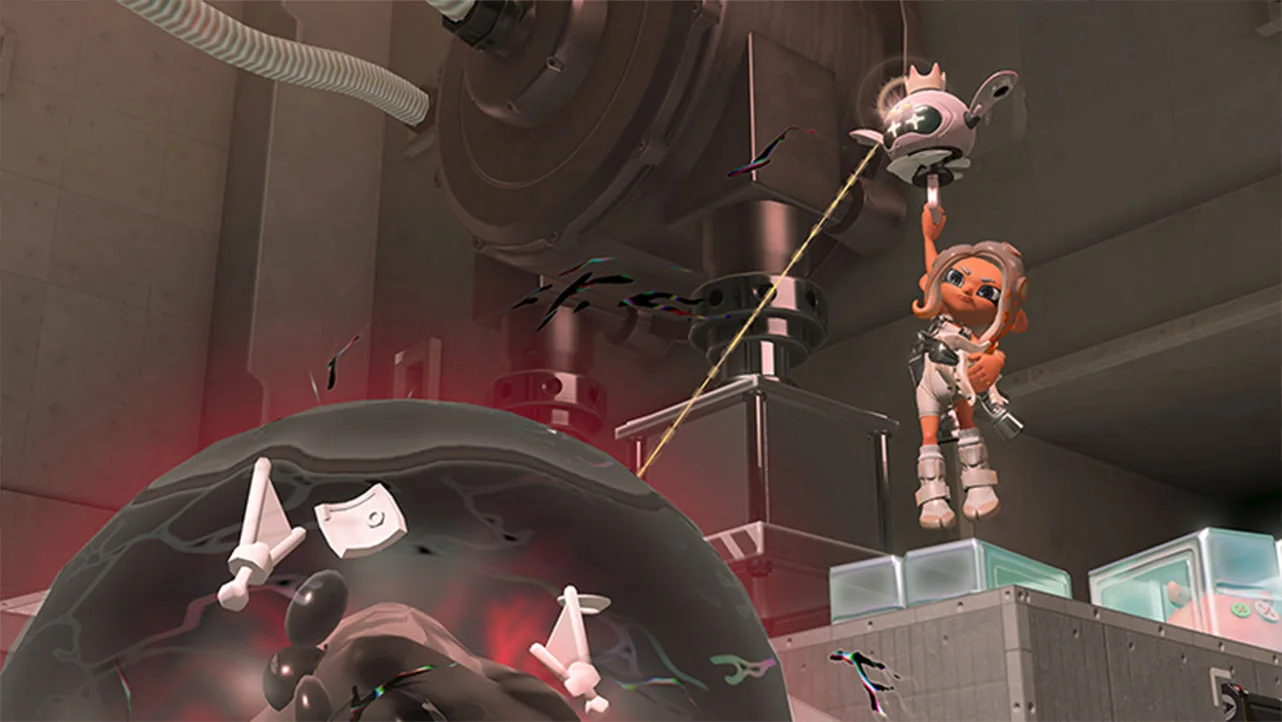
The critical distribution is more positive than the ordinal rank alone sounds: 18 of the 22 Metacritic reviews are classified positive, four mixed, and none negative. The 7.8 user score from 151 ratings is also generally favorable. A later indexed OpenCritic snapshot places Critics Recommend at roughly 83%, up from the 80% shown in an early ten-review launch thread. That movement is exactly why this article dates its numbers and avoids treating a launch snapshot as permanent.
Reviewers commonly praised the way randomized challenges, weapon Palettes, color-chip upgrades, and permanent progression turn familiar ink combat into a run-based power-building loop. The stark visual identity and soundtrack also gave the expansion a distinct character. The recurring criticism was structural: repeated objectives and environments could become noticeable in a format built around replay, and some critics wanted more encounter variety or faster pacing.
Those themes explain both the appeal and the ceiling. A player who enjoys optimizing builds and making another run can value Side Order more highly than someone expecting a conventional story campaign or the competitive breadth of Splatoon 3. Meanwhile, a critic reviewing DLC may weigh duration, repetition, and value differently from a critic reviewing a complete game with several online and offline modes.
The honest conclusion is still that Side Order has the lowest Metascore here. The qualification is that 78 describes a smaller, deliberately specialized expansion from a much smaller pool. It should not be advertised as an 83 because many critics liked its experiment, but it also should not be presented as evidence that the expansion was broadly rejected.
Splatoon Raiders vs the numbered trilogy
Raiders' 81 Metascore is best read as a strong reception for a different kind of Splatoon, not as a failed attempt to equal the numbered trilogy. It is tied with the original, only two points behind Splatoon 2 and 3, and based on 113 critic reviews in Metacritic's main Nintendo Switch 2 panel. That is a substantial sample, unlike Side Order's 22-review DLC pool, so the narrow gap cannot simply be waved away as a lack of coverage.
The larger distinction is what critics were scoring. Splatoon 2 and 3 are multiplayer packages built around competitive ink battles, with story campaigns and Salmon Run alongside PvP. Raiders moves the center of gravity to PvE: short raids, loot drops, weapon and Gadget upgrades, persistent character growth, a campaign designed for solo play, and optional cooperative missions. Someone shopping for ranked competition and someone shopping for a progression-heavy solo adventure are therefore not choosing between interchangeable 83- and 81-point products.
The positive review pattern reflects that change. GameSpot praised how convincingly the established movement and shooting translate into a single-player looter shooter. Tom's Guide highlighted its quick raids, crafting depth, co-op, smooth performance, and steady reward loop. Other favorable reviews similarly emphasized that almost every outing advances a build or returns useful gear. Those strengths give Raiders an identity beyond “Splatoon without PvP.”
The trade-off is narrower variety. Digital Citizen and several other critics found the familiar enemies and repeated battle structures more noticeable later in the campaign; even highly positive reviews mention repetition. That concern helps explain how a spin-off with satisfying fundamentals can settle at 81 rather than the trilogy-leading 83. It is a criticism of pacing and content diversity, not evidence that the core ink combat stopped working.
A secondary OpenCritic snapshot points in the same general direction without producing the same number: 82 Top Critic Average, 86% Critics Recommend, and 128 reviews in the indexed listing checked for this article. Because the live OpenCritic page was unavailable, those figures are labeled as an indexed snapshot rather than a live capture. They should also remain separate from Metacritic's weighted 81.
The practical comparison is genre fit, not a two-point horse race. Choose a numbered entry when competitive Turf War and ranked modes are the priority; consider Raiders when solo PvE, build crafting, repeatable raids, and optional co-op sound more appealing. For a critic-by-critic look at the spin-off itself, see our full Splatoon Raiders review-score analysis.
Critic scores vs user scores across Splatoon
The user-score ranking tells a noticeably different story. In the August 28 snapshot, Raiders leads participating Metacritic users at 9.2/10, followed by the original Splatoon at 8.7, Splatoon 2 at 8.4, Side Order at 7.8, and Splatoon 3 at 7.4. The critic table instead has Splatoon 2 and 3 tied at the top. Neither ordering invalidates the other because the groups, scales, timing, and collection methods are different.
Metacritic explicitly excludes visitor ratings from the Metascore. Professional reviews are gathered from eligible publications and weighted; the User Score is an average of site visitors who voluntarily choose to rate. Game user ratings do not even open until 36 hours after release, according to Metacritic's support page. They can then accumulate for years, while most professional reviews cluster around launch.
Sample size matters here too. Raiders has 1,850 user ratings in the freshest direct check, the original has 1,594, Splatoon 2 has 1,692, Splatoon 3 has 963, and Side Order has 151. A smaller pool can move more sharply when new ratings arrive. Raiders' count rose by 12 during this article's same-day research, while its displayed score remained 9.2. That is a practical demonstration of why the date and count belong beside the decimal.
The visible distributions add context without revealing a single cause. Splatoon 2's page classifies 83% of user ratings as positive, compared with 70% for Splatoon 3 and 70% for Side Order. User reviews on Splatoon 3's page include praise for its movement, modes, and long-term play alongside complaints about communication errors, balance changes, and familiarity. Those are themes among participating Metacritic reviewers, not proof that the entire player base shares one verdict.
Raiders' unusually high early user score deserves the same restraint. Its audience may be especially enthusiastic about the series' new solo and co-op direction, and early adopters are a self-selecting group. Future ratings can lower or raise the average. Likewise, the original's 8.7 may reflect affection for its novelty and legacy, but an aggregate user score cannot isolate nostalgia as the cause.
Use critic and user scores as two lenses. Critic aggregates are a structured launch-era comparison across publications; user aggregates show how a voluntary audience rates the product over time. Agreement strengthens a broad reception claim. Disagreement is a cue to read the underlying reviews, inspect the sample, and ask whether the disputed design choices match your own priorities.
Which Splatoon reviewed best—and which should you play?
Splatoon 2 and Splatoon 3 reviewed best by Metacritic score, tied at 83. There is no honest way to crown one of them the sole aggregate winner without inventing a tiebreaker. Raiders and the original share 81, and Side Order has 78. That is the complete score answer; the better purchase depends on the modes you want and the hardware you own.
For a current, broad mainline package, Splatoon 3 is the most practical starting point in this group. Nintendo's official guide combines competitive Turf War and Anarchy Battles with Story Mode and always-available four-player Salmon Run. Its 83 does not make every connection, balance, or design complaint disappear, but the range of supported activities makes it the clearest fit for someone who wants the modern competitive series rather than one specialized branch.
Splatoon 2 remains the co-winner historically, and its role in adding Salmon Run matters. However, buyers should not treat an aggregate preserved from 2017 as a live-service status page. The original Wii U game's limitation is even more concrete: Nintendo ended official Wii U online play on April 8, 2024. Its offline content remains part of the series' history, but its defining official online Turf War is no longer a supported contemporary reason to choose it.
Raiders is the fit for a different audience. Nintendo describes it as single-player-focused, with solo progression and support for up to three additional players online or by local wireless. It also requires Nintendo Switch 2. Side Order is the focused run-based choice, but it is DLC for Splatoon 3 rather than a standalone substitute. Check the site's current Splatoon Raiders game information before using an aggregate score as a buying checklist.
What is the highest Splatoon Metacritic score?
It is 83 in this comparison, shared by Splatoon 2 and Splatoon 3 on Nintendo Switch. Both are tied for first as of August 28, 2026.
What is Splatoon Raiders' Metacritic score?
The Nintendo Switch 2 main panel shows 81 from 113 critic reviews. That ties the original Splatoon and sits two points below Splatoon 2 and 3. The number may move if Metacritic adds or changes included reviews.
Does Splatoon 3 have a higher score than Splatoon 2?
No. Both currently display an 83 Metascore. Splatoon 3 has a larger main-panel critic pool in this snapshot, but review count is context, not a score tiebreaker.
Why is Side Order's Metacritic score lower?
Its 78 reflects reviews of a smaller, replayable DLC built around repeated runs and upgrades. Critics often liked its combat and build experimentation while some found the objectives, encounters, or pacing repetitive. It also has only 22 critic reviews, so it is not a scope-for-scope comparison with a full game.
Are Metacritic user scores reliable?
They are useful evidence of how participating site users rate a game, but they are voluntary, unweighted audience submissions rather than a representative survey. Always read the count, date, review distribution, and actual comments; never merge the 0–10 User Score into the 0–100 Metascore.
Does OpenCritic rank Splatoon differently?
Its historical averages broadly support the same upper-70s-to-low-80s franchise range, but OpenCritic uses its own review pool and publishes a separate Critics Recommend percentage. Compare its averages with other OpenCritic averages, not directly as if they were Metacritic's weighted scores.
The series' aggregates are strikingly consistent: even the lowest entry in this selected set is only five points below the leaders. The useful lesson is not that every game is the same quality. It is that review consensus stays favorable while each release changes the package, audience, and trade-offs. Start with the mode you want, then use the score and underlying reviews to test that choice—not to replace it.

Loading comments...